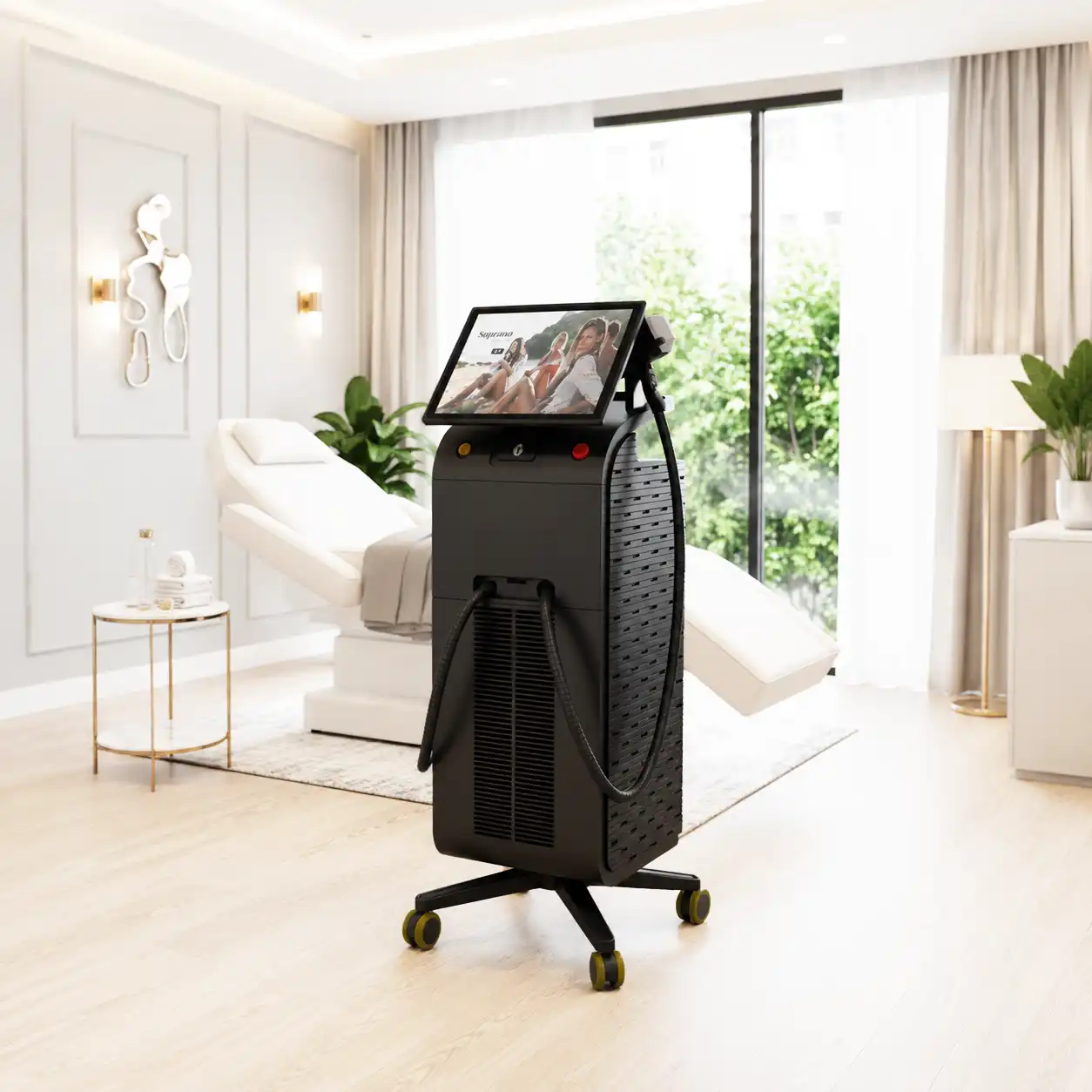
Hair Removal Laser Machine Types: A Complete Comparison Guide
Hair removal laser machine types include diode, Alexandrite, Nd:YAG and Ruby lasers, while IPL uses broad-spectrum light rather than a single laser wavelength.
For beauty salons, aesthetic clinics, and professional hair removal businesses, choosing the right technology is not simply about selecting the machine with the highest power. Wavelength, skin tone, hair color, treatment area, cooling system, spot size, and operating efficiency can all affect treatment performance.
This guide compares the main professional laser and light-based hair removal technologies and explains how they differ, so salon owners and buyers can make a more informed equipment decision.
What Are the Main Hair Removal Laser Machine Types?
Professional hair removal systems can be divided into several major technologies:
- Alexandrite Laser – 755 nm
- Diode Laser – typically around 800–810 nm
- Nd:YAG Laser – 1064 nm
- Ruby Laser – 694 nm
- IPL – broad-spectrum light, not a traditional laser
These technologies work on the principle of selective photothermolysis. The target is primarily the melanin in the hair, which absorbs light energy and converts it into heat. The resulting thermal effect damages the hair follicle while the surrounding skin is protected as much as possible through appropriate wavelength selection, pulse parameters, cooling, and professional treatment protocols.
The major difference between these technologies is their wavelength and how that wavelength interacts with melanin and penetrates the skin.
Hair Removal Laser Machine Types at a Glance
| Technology | Wavelength | Common Skin Applications | Main Strength | Key Consideration |
|---|---|---|---|---|
| Alexandrite | 755 nm | Fair to medium skin | Fast treatment and strong melanin absorption | Requires careful parameter selection for darker skin |
| Diode | 800–810 nm | Broad range of skin types | Versatile professional option | Performance depends on system design and settings |
| Nd:YAG | 1064 nm | Medium to dark skin | Deep penetration and lower epidermal melanin absorption | May be less responsive on very fine or lightly pigmented hair |
| Ruby | 694 nm | Fair skin | Strong melanin absorption | Less commonly used in modern clinics |
| IPL | Broad spectrum | Mainly lighter to medium skin | Flexible and widely available | IPL is not a true laser |
There is no single technology that is automatically the best choice for every client. Professional operators should consider both the device specifications and the individual characteristics of the person being treated.
Alexandrite Laser Hair Removal Machine – 755 nm
Alexandrite laser systems use a wavelength of approximately 755 nm. Because this wavelength is strongly absorbed by melanin, Alexandrite technology can provide efficient treatment when there is sufficient contrast between darker hair and lighter skin.
Alexandrite is commonly associated with fast treatment speeds and can be particularly useful for larger treatment areas such as the legs, back, and arms.
Advantages of Alexandrite Laser
- High absorption by melanin
- Fast treatment for larger areas
- Effective on many dark and coarse hairs
- Well established in professional aesthetic applications
- Can provide efficient treatment when appropriate skin and hair characteristics are present
Limitations
The strong interaction with melanin also means that skin pigmentation needs to be considered carefully. Darker skin contains more epidermal melanin, which can compete with the hair as a target for the laser energy.
For this reason, wavelength selection and treatment parameters are especially important when treating clients with darker skin tones.
Diode Laser Hair Removal Machine – 800–810 nm
Diode laser technology is one of the most widely used professional options for long-term hair reduction. Many systems operate around the 800–810 nm range, providing a balance between melanin absorption and penetration depth.
This combination makes diode lasers highly versatile for professional beauty salons and aesthetic clinics.
A major advantage of diode technology is its flexibility. Depending on the specific system, configuration, spot size, pulse width, cooling technology, and operating parameters, diode lasers can be used across a broad range of treatment areas and client profiles.
Why Do Beauty Salons Choose Diode Laser?
Diode systems are popular in professional environments for several reasons:
- Suitable for a broad range of professional applications
- Effective for many dark and coarse hair types
- Available in different configurations
- Fast treatment speeds
- Large spot sizes can improve treatment efficiency
- Advanced cooling systems can improve client comfort
- Available as single-wavelength and multi-wavelength systems
- Suitable for full-body treatment programs
For a salon treating a large number of clients, equipment efficiency is particularly important. A combination of appropriate spot size, repetition rate, cooling performance, and reliable power delivery can help operators complete treatments more efficiently.
Nd:YAG Laser Hair Removal Machine – 1064 nm
Nd:YAG laser systems use a longer 1064 nm wavelength. Compared with shorter wavelengths such as 755 nm, 1064 nm light penetrates deeper into the skin and has lower absorption by epidermal melanin.
This characteristic makes Nd:YAG technology an important option for clients with darker skin tones when appropriate professional protocols are followed.
Advantages of Nd:YAG Laser
- Deep penetration
- Lower melanin absorption compared with shorter wavelengths
- Widely used for darker skin types
- Suitable for deeper and coarse hair
- Established professional laser technology
However, the lower melanin absorption can also mean that very fine or lightly pigmented hair may be more challenging to treat.
For clinics serving a diverse customer base, understanding the differences between diode and Nd:YAG technology can help determine which platform better fits their treatment requirements.

Ruby Laser Hair Removal Machine – 694 nm
Ruby laser technology uses a wavelength of approximately 694 nm. It is one of the earlier laser technologies used for hair removal.
Because Ruby lasers have strong absorption by melanin, they are generally associated with fair skin and dark hair. However, the same strong melanin absorption that makes the technology effective on suitable candidates can also increase the importance of skin pigmentation considerations.
Ruby laser systems are less common in modern professional hair removal markets because newer technologies provide greater flexibility and broader treatment applications.
Nevertheless, Ruby remains relevant when discussing the development and classification of hair removal laser technologies.
IPL Hair Removal Machine: How Is It Different From a Laser?
IPL stands for Intense Pulsed Light.
Although IPL is commonly grouped with laser hair removal in consumer searches, it is technically different from a laser.
A laser system generally produces light at a specific wavelength, while IPL devices produce a broader spectrum of light that can be filtered and adjusted for different applications.
IPL vs Laser Hair Removal
| Feature | Laser | IPL |
|---|---|---|
| Light source | Laser | Broad-spectrum flashlamp |
| Wavelength | Specific wavelength | Range of wavelengths |
| Energy delivery | Highly targeted | Broader light spectrum |
| Hair removal | Professional long-term reduction | Hair reduction |
| Technology | Alexandrite, Diode, Nd:YAG, Ruby | IPL |
IPL systems can be attractive because of their versatility and generally lower equipment cost, but professional buyers should not assume that IPL and laser systems deliver identical performance.
For clinics positioning themselves around professional laser hair removal, diode, Alexandrite, and Nd:YAG systems are more relevant when comparing dedicated laser technologies.
How Do Laser Types Differ by Skin Tone?
Skin tone is one of the most important factors when selecting a hair removal technology.
The reason is simple: hair removal lasers target melanin. Melanin is also present in the skin.
The greater the amount of melanin in the epidermis, the more carefully the wavelength and treatment parameters need to be selected.
Fair Skin
Alexandrite and diode lasers are commonly considered for clients with fair skin and dark hair.
The strong contrast between hair and skin can allow the laser energy to target the hair effectively.
Medium Skin
Diode systems can provide a versatile option for many medium skin tones. Alexandrite may also be suitable depending on the individual and treatment parameters.
Darker Skin
Longer wavelengths such as 1064 nm Nd:YAG are widely used when treating darker skin because they interact less with epidermal melanin than shorter wavelengths.
Certain diode systems can also be used for a broad range of skin types when appropriate parameters and cooling are available.
The suitability of a specific device should always be determined by the equipment specifications, operator training, client assessment, and treatment protocol.
How Do Hair Removal Lasers Work on Different Hair Colors?
Hair color is another major consideration.
Laser hair removal relies heavily on melanin within the hair shaft and follicle. As a result, darker hair generally provides a stronger target than hair with little or no pigment.
Black Hair
Black hair usually contains a high concentration of melanin and is generally a strong target for laser-based hair reduction.
Brown Hair
Brown hair can also respond well, although results can vary depending on the depth and concentration of pigment.
Blonde Hair
Very light blonde hair contains less melanin, making it more difficult for many laser systems to target effectively.
Red Hair
Red hair contains different pigment characteristics and may respond less predictably to conventional laser hair removal.
Gray or White Hair
Gray and white hair contain little or no melanin, so conventional laser hair removal is generally less effective on these hairs.
This is one reason why a professional consultation and client assessment should be completed before treatment.
Diode vs Alexandrite vs Nd:YAG: What’s the Difference?
The three technologies most relevant to modern professional laser hair removal are often diode, Alexandrite, and Nd:YAG.
| Feature | Diode | Alexandrite | Nd:YAG |
|---|---|---|---|
| Typical wavelength | 800–810 nm | 755 nm | 1064 nm |
| Penetration | Medium to deep | Relatively shallow | Deep |
| Melanin absorption | Moderate | Higher | Lower |
| Common application | Broad range | Fair to medium skin | Darker skin |
| Dark/coarse hair | Excellent | Excellent | Good |
| Treatment speed | Fast | Very fast | Moderate to fast |
| Professional flexibility | High | Medium | High |
| Common clinic use | Very common | Common | Common |
The most suitable option depends on the client population and the type of treatments a clinic provides.
For a beauty salon that wants a versatile system for multiple body areas and a wide customer base, diode technology is often attractive because of its balance between treatment flexibility, efficiency, and equipment configuration options.
Single-Wavelength vs Multi-Wavelength Diode Laser
Not all diode laser machines are configured in the same way.
Single-wavelength diode systems typically focus on one main wavelength, commonly around 808 nm.
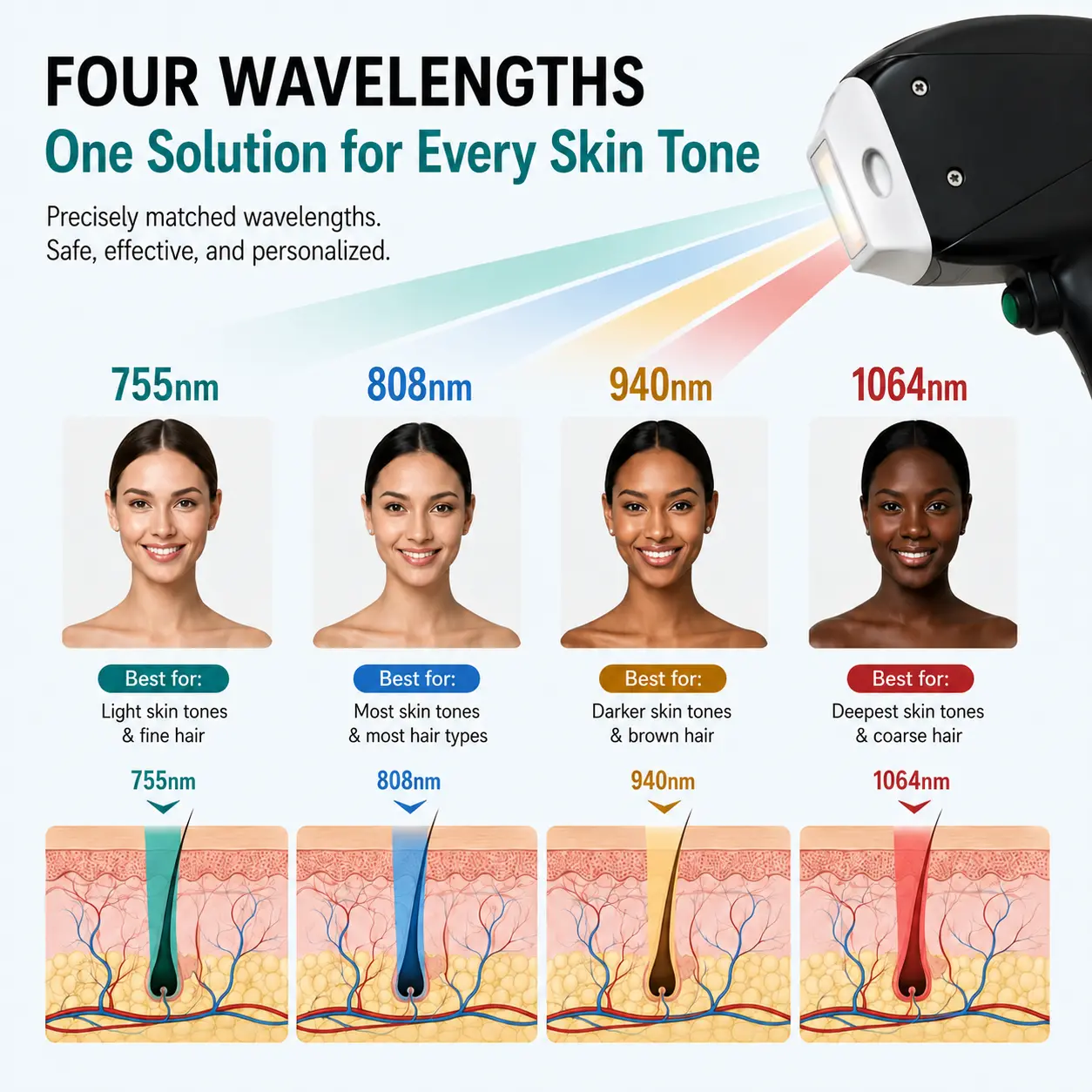
Multi-wavelength systems combine two or more wavelengths in one platform. Depending on the equipment, configurations may include combinations such as 755 nm, 808 nm, and 1064 nm.
Single-Wavelength Diode Laser
A single-wavelength system can offer:
- Straightforward operation
- Focused treatment characteristics
- Simpler system configuration
- Potentially lower equipment complexity
Multi-Wavelength Diode Laser
A multi-wavelength platform can provide greater treatment flexibility by combining different penetration depths and melanin absorption characteristics.
For example, a 755/808/1064 nm configuration can provide operators with more options when working with different skin tones, hair characteristics, and treatment areas.
For professional clinics, the important question is not simply how many wavelengths a machine has. Buyers should also evaluate the actual energy delivery, cooling system, spot size, pulse control, handpiece design, reliability, and manufacturer support.
How to Choose a Professional Hair Removal Laser Machine for a Salon
Choosing professional hair removal equipment requires more than comparing prices.
Before purchasing a machine, salon owners should consider the following factors.
1. Client Skin Types
Look at the skin tones your salon treats most frequently.
A clinic serving mainly fair-skinned clients may have different requirements from a clinic serving a highly diverse customer base.
2. Hair Characteristics
Consider whether your clients typically have:
- Coarse hair
- Fine hair
- Dense hair
- Dark hair
- Different hair colors
A versatile platform may be more suitable for salons with a wide range of clients.
3. Wavelength Configuration
Check whether the machine uses a single wavelength or multiple wavelengths.
Do not evaluate wavelength count alone. The actual performance of the system depends on the complete optical and energy-delivery design.
4. Cooling System
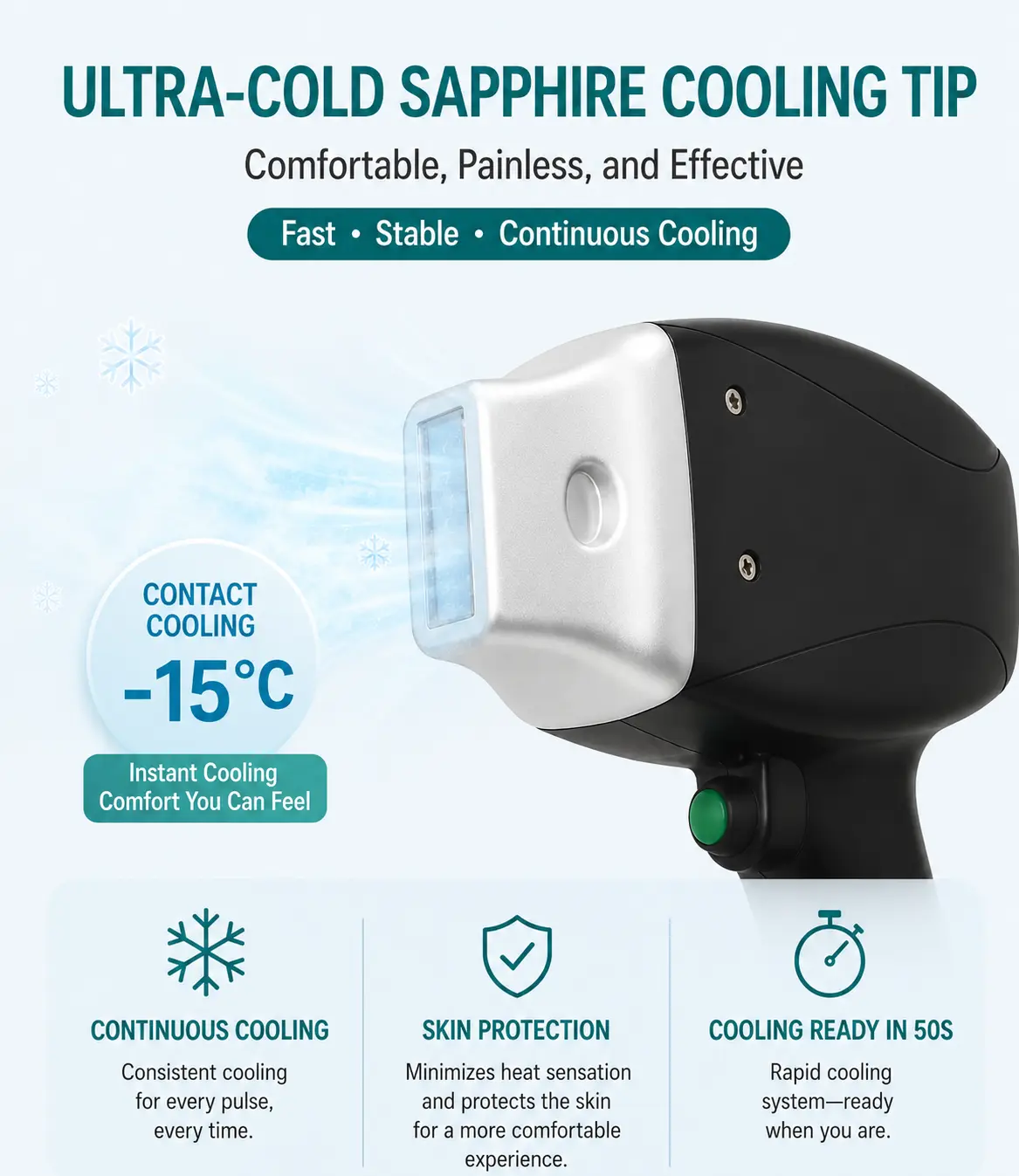
Cooling is an important part of professional laser hair removal.
A reliable cooling system can help protect the skin surface and improve client comfort during treatment.
Common cooling approaches include contact cooling and sapphire cooling systems, depending on the machine design.
5. Treatment Speed
For busy salons, treatment efficiency directly affects business capacity.
Consider:
- Spot size
- Repetition rate
- Pulse duration
- Cooling recovery
- Handpiece ergonomics
- Full-body treatment efficiency
A machine that allows operators to treat larger areas efficiently can be particularly valuable for salons offering full-body hair removal.
6. Machine Reliability
Professional equipment needs to operate consistently.
Before purchasing, ask the supplier about:
- Laser source
- Expected component lifespan
- Cooling system
- Warranty
- Replacement parts
- Technical support
- Operator training
- Software updates
- After-sales service
A lower purchase price does not necessarily mean a lower total cost of ownership.
7. Supplier Experience
The supplier is part of the equipment investment.
A reliable manufacturer should be able to provide technical specifications, product documentation, training materials, troubleshooting support, and spare parts when required.
For international buyers, communication and after-sales support are especially important because technical issues cannot always be solved through an in-person service visit.
Which Hair Removal Laser Type Is Best for a Beauty Salon?
There is no universal answer because the best system depends on the salon’s target customers and treatment strategy.
A salon focusing on fair-skinned clients may consider Alexandrite or diode technology.
A clinic treating a wider range of skin tones may prefer a versatile diode system or a combination of diode and Nd:YAG capabilities.
For darker skin types, longer-wavelength technology such as Nd:YAG can be particularly relevant.
For many modern beauty businesses, diode laser systems are attractive because they offer a balance of versatility, treatment efficiency, cooling options, and professional configuration choices.
The best approach is to match the machine to the salon’s actual customer base rather than selecting equipment based only on marketing claims.
Why Diode Laser Is a Popular Choice for Professional Clinics
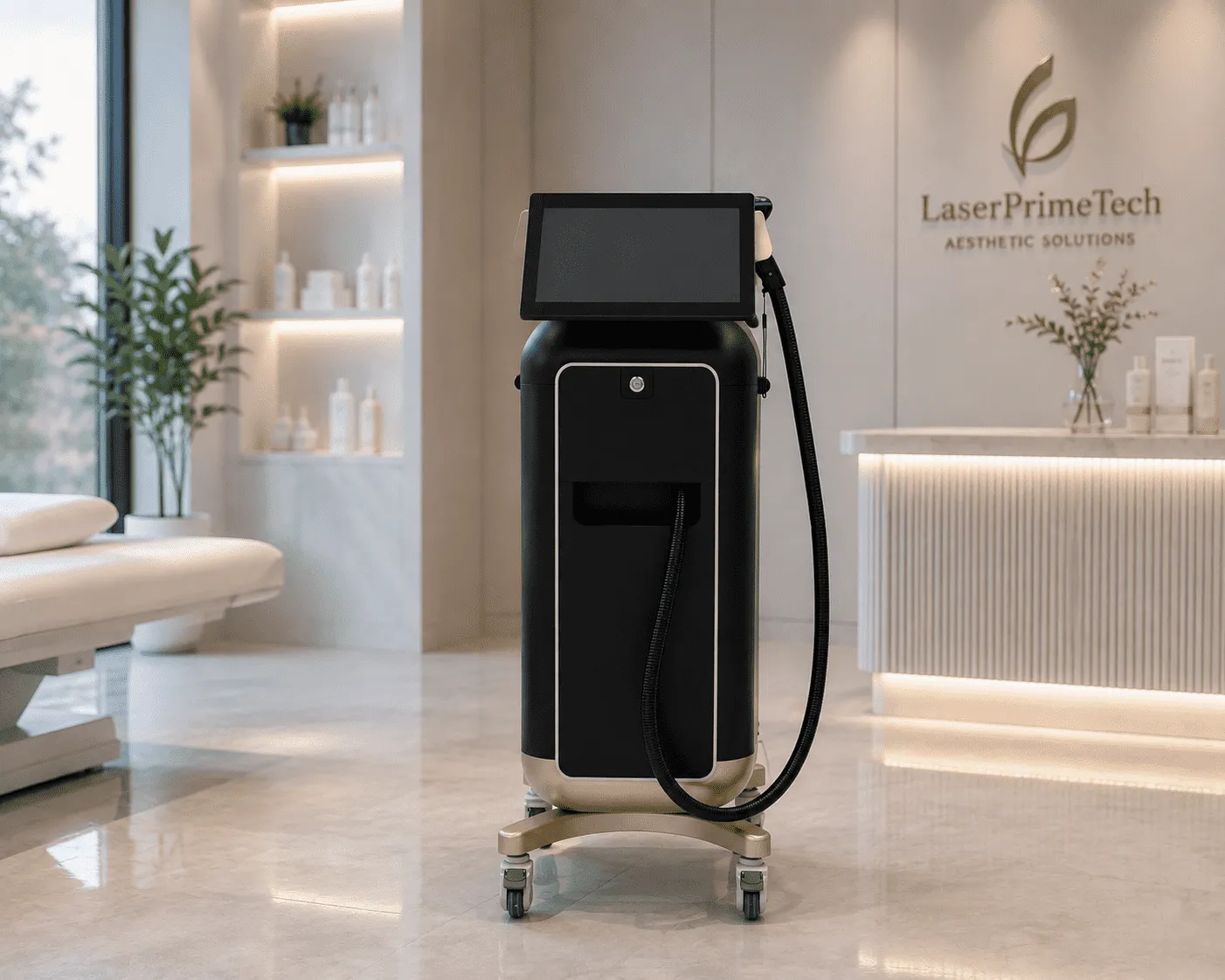
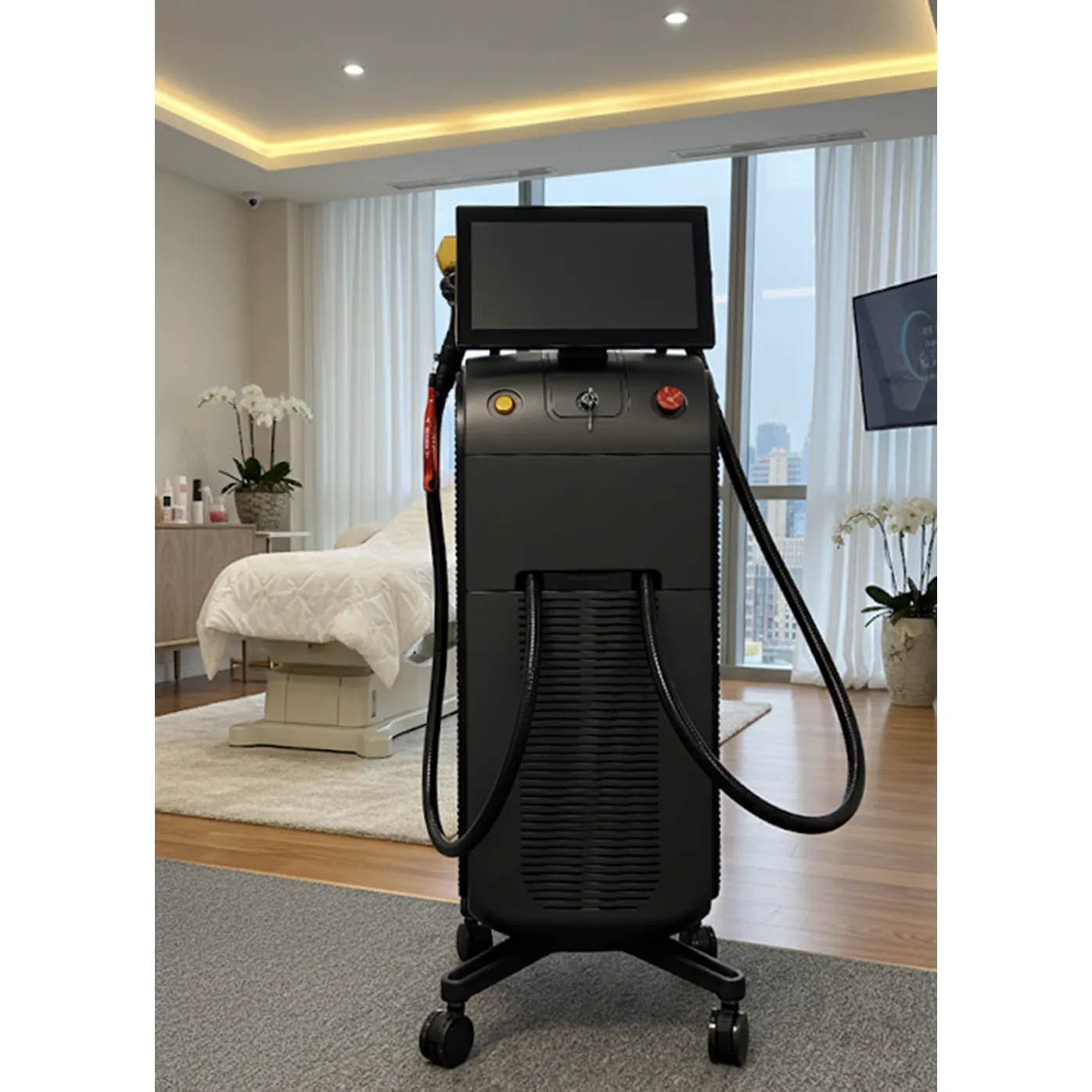
Diode laser technology has become an important part of the professional hair removal market because it can combine effective hair targeting with flexible system configurations.
Modern diode machines may include:
- High-performance laser modules
- 755/808/1064 nm multi-wavelength configurations
- Sapphire contact cooling
- Large treatment spot sizes
- Adjustable pulse parameters
- Ergonomic handpieces
- Touchscreen controls
- Treatment parameter presets
For clinics that provide high volumes of hair removal treatments, these features can contribute to more efficient workflows and a better overall treatment experience.
However, specifications should always be evaluated as a complete system rather than focusing on one number such as laser power.
Frequently Asked Questions
What are the main hair removal laser machine types?
The main professional hair removal laser technologies include Alexandrite at 755 nm, diode around 800–810 nm, Nd:YAG at 1064 nm, and Ruby at 694 nm. IPL is also commonly discussed alongside them, although IPL uses broad-spectrum light rather than a traditional laser wavelength.
Which laser is best for dark skin?
Nd:YAG at 1064 nm is widely used for darker skin because its longer wavelength has lower absorption by epidermal melanin than shorter wavelengths. Certain diode systems can also be suitable for a broad range of skin types when the machine and treatment parameters are appropriate.
What is the difference between diode and Alexandrite laser?
Alexandrite uses a 755 nm wavelength and has stronger melanin absorption, making it particularly useful for suitable fair-to-medium skin types. Diode systems commonly operate around 800–810 nm and can provide a versatile balance between penetration, melanin targeting, and treatment flexibility.
Is IPL the same as laser hair removal?
No. IPL is not a traditional laser. IPL produces a broad spectrum of light, while laser hair removal systems use a specific wavelength. IPL can reduce hair growth, but its optical technology and energy delivery are different from professional diode, Alexandrite, and Nd:YAG laser systems.
Is a multi-wavelength diode laser better than a single-wavelength machine?
A multi-wavelength diode laser can provide greater flexibility because different wavelengths interact differently with skin and hair. However, more wavelengths do not automatically mean better performance. Buyers should also evaluate energy delivery, cooling, spot size, reliability, treatment speed, and manufacturer support.
Conclusion
Understanding the different hair removal laser machine types is essential before investing in professional aesthetic equipment.
Alexandrite, diode, Nd:YAG, and Ruby lasers each use different wavelengths and have different characteristics. IPL is another common hair reduction technology, but it should be considered separately because it is not a conventional laser.
For professional beauty salons and aesthetic clinics, the right choice depends on the client population, skin tones, hair characteristics, treatment areas, expected treatment volume, and equipment configuration.
Among modern professional systems, diode laser technology remains a versatile option for clinics looking for efficient hair reduction across a broad range of applications. Multi-wavelength diode platforms can provide additional flexibility, while advanced cooling and large treatment spot sizes can support efficient and comfortable professional treatments.
Before purchasing a hair removal laser machine, compare the wavelength, cooling system, treatment speed, laser source, handpiece, reliability, warranty, and after-sales support—not just the equipment price.
A well-matched machine can become a long-term asset for a beauty salon, helping the business provide consistent treatments while building a scalable professional hair removal service.