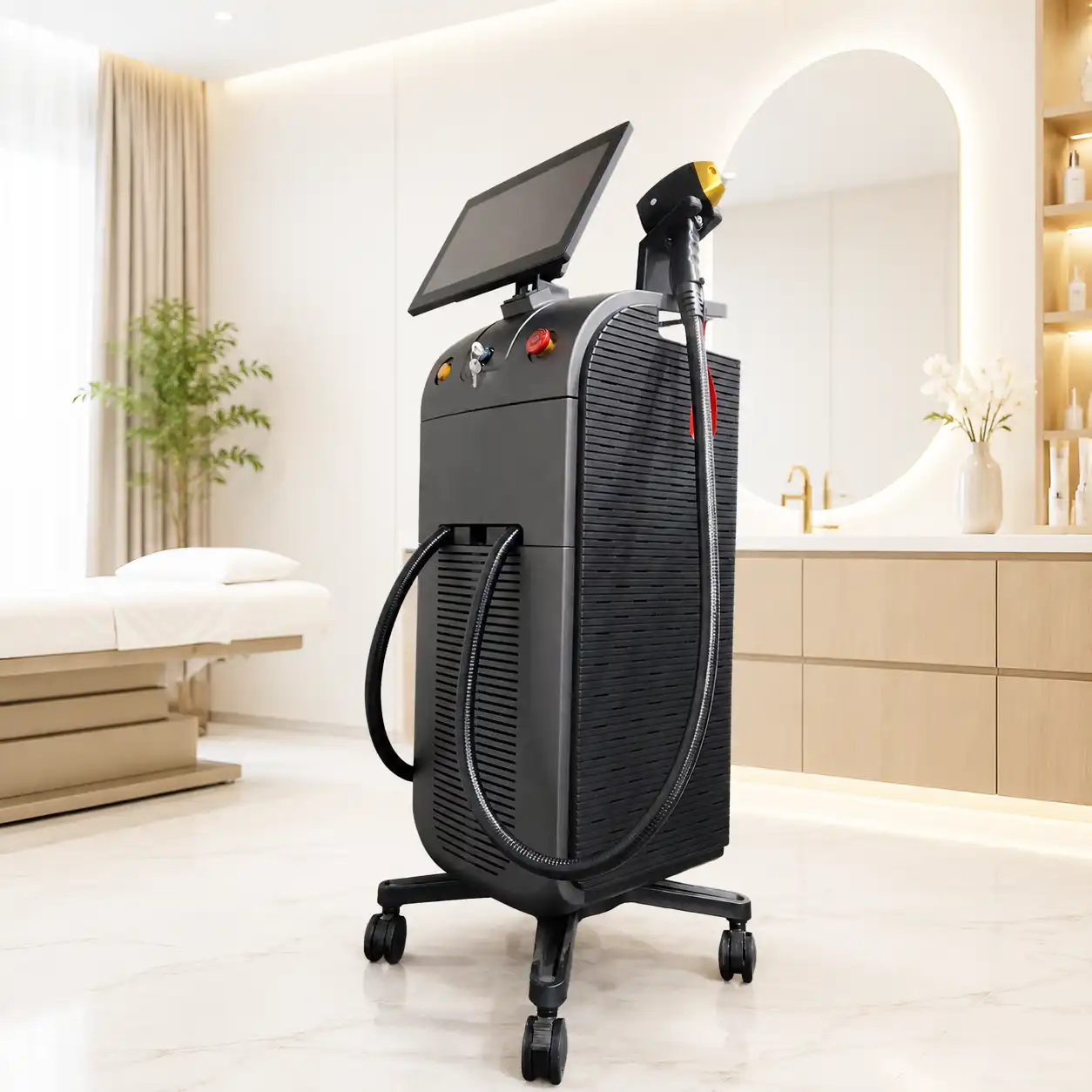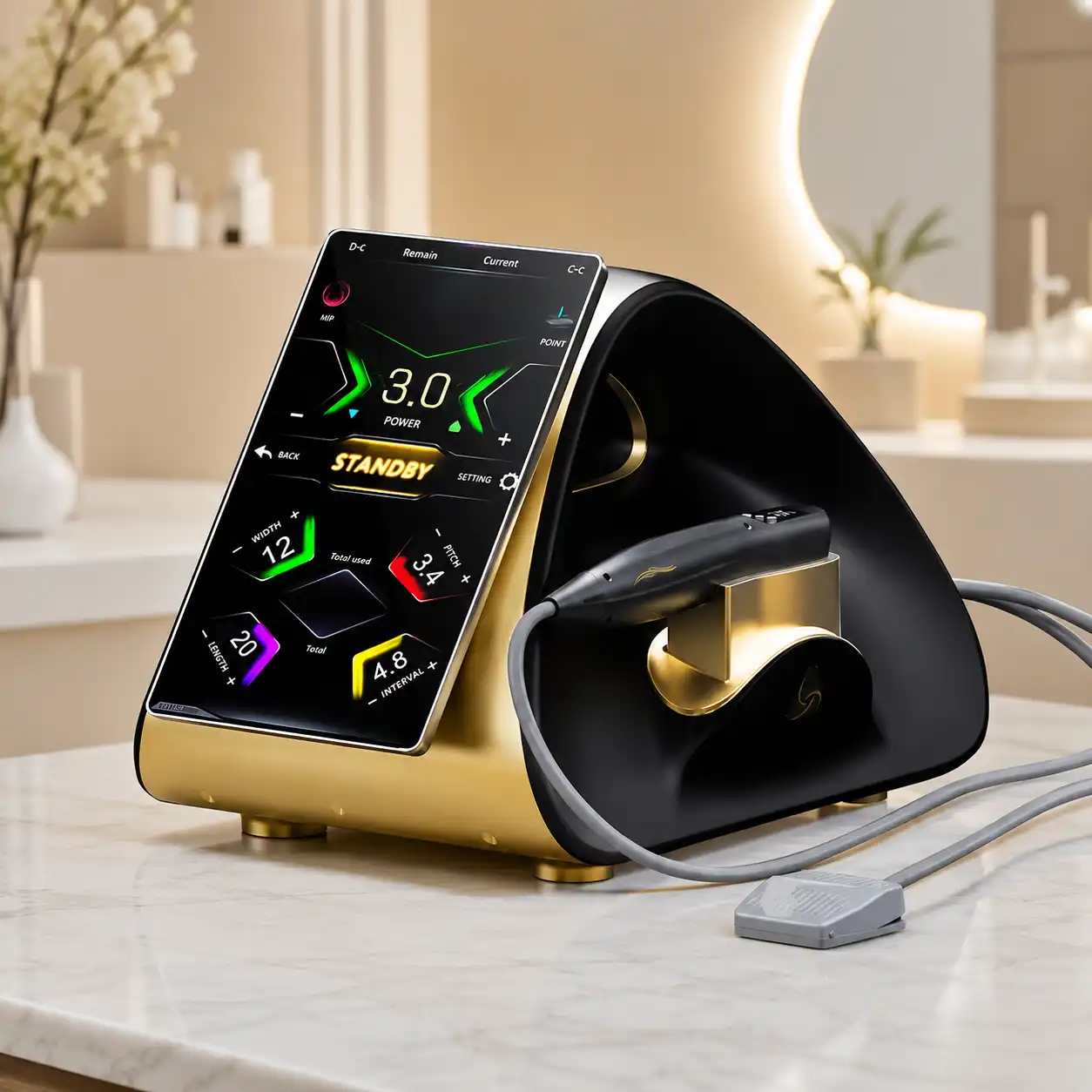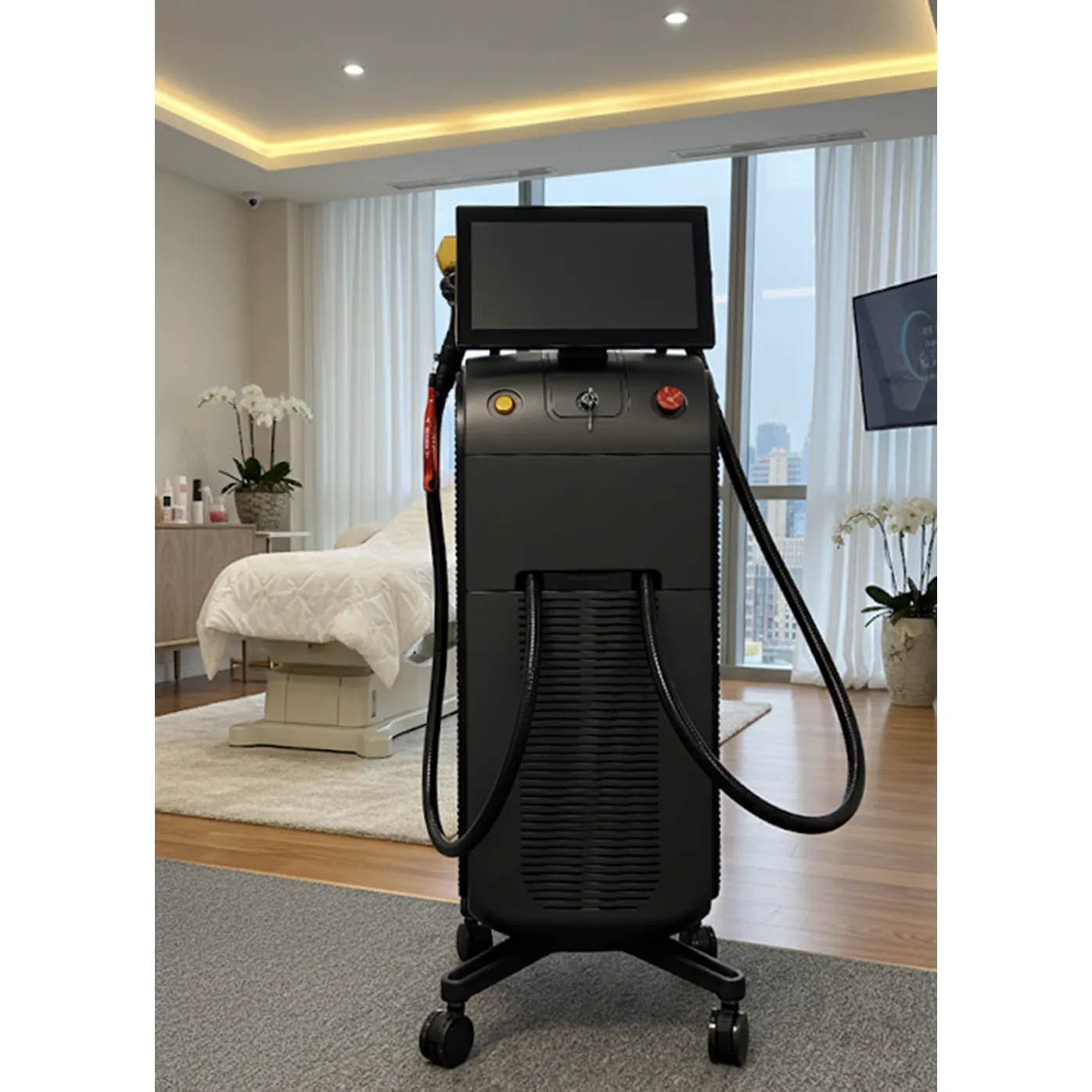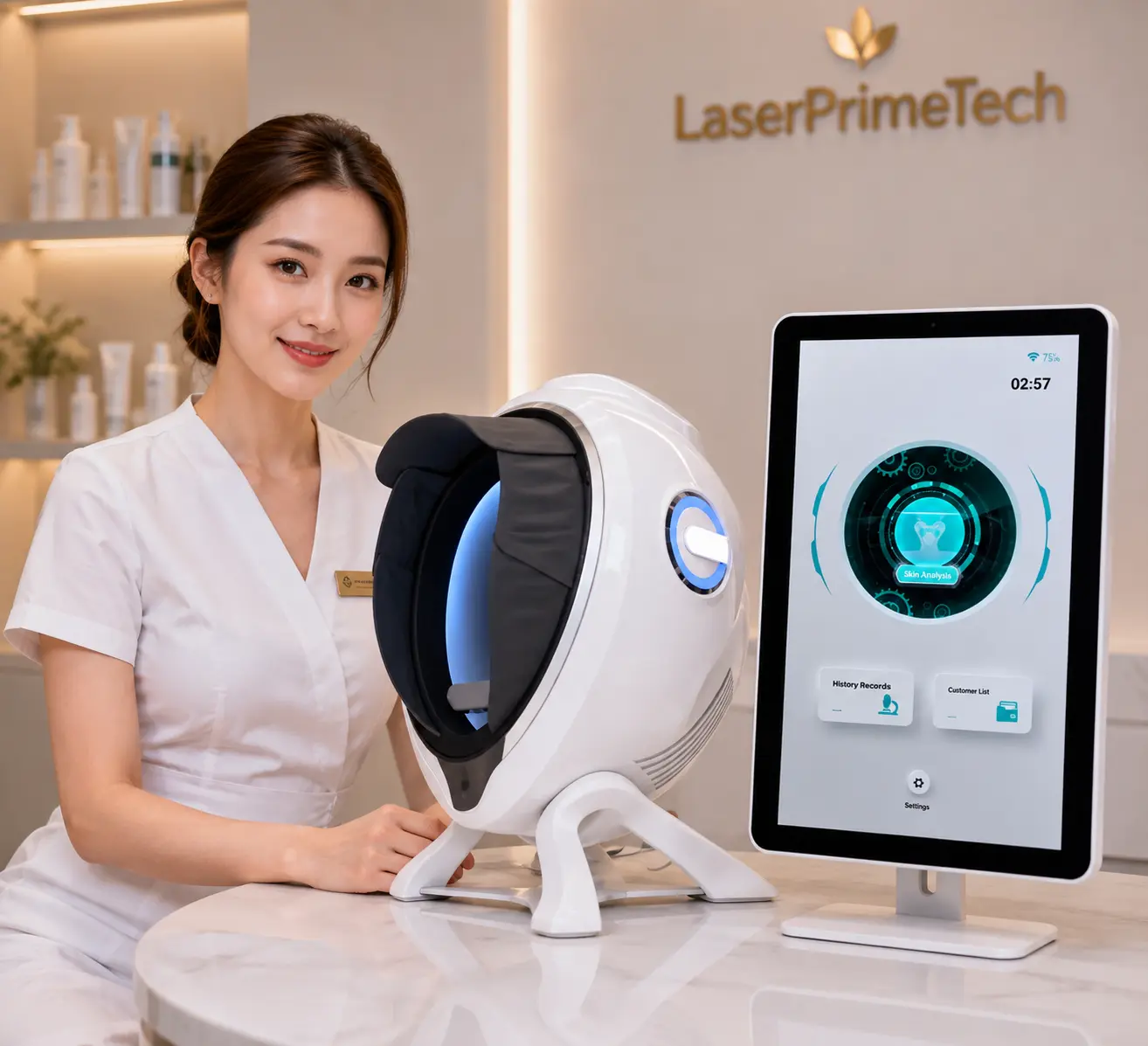
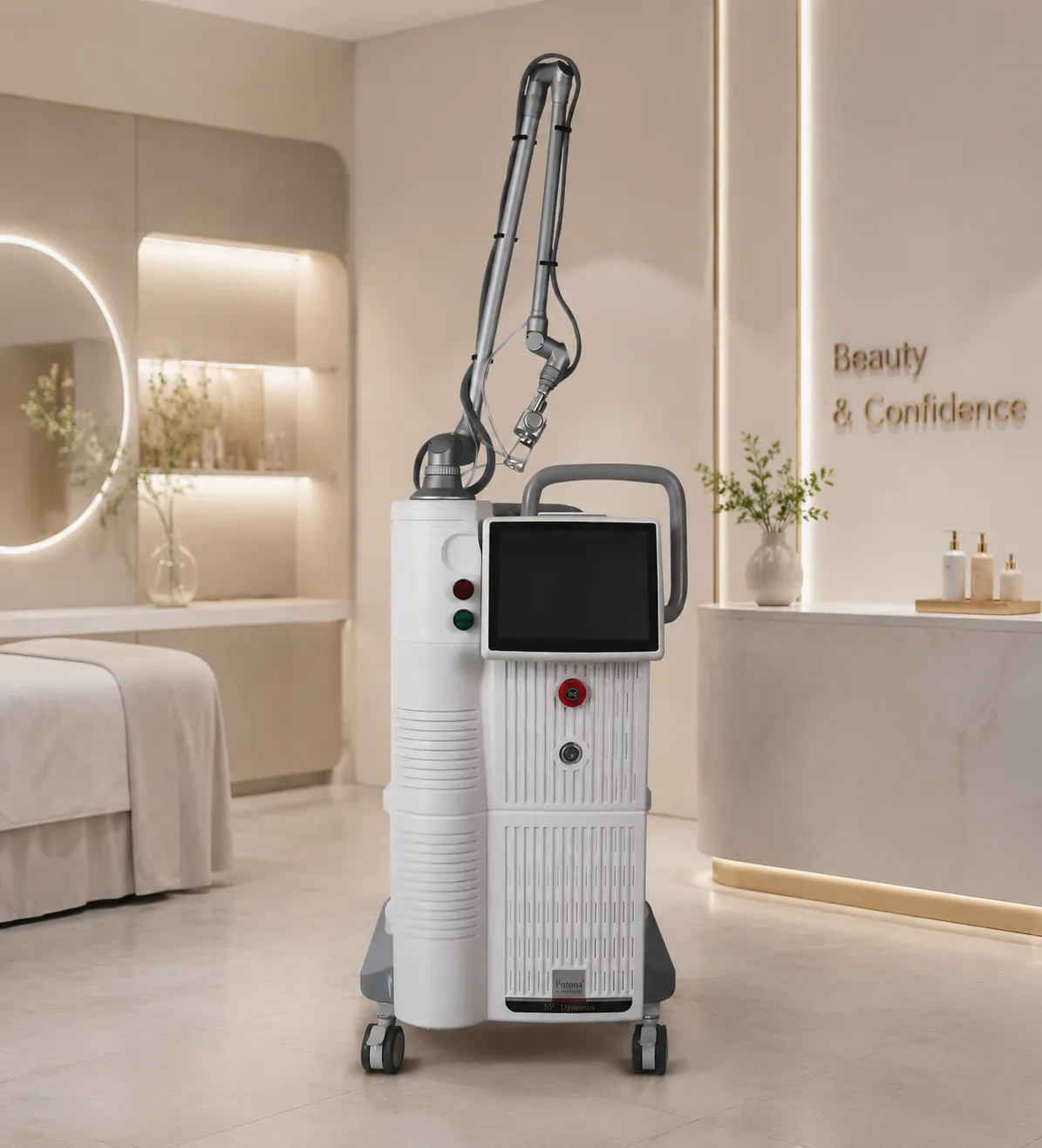
A laser resurfacing machine is a professional aesthetic device designed to improve skin texture, wrinkles, acne scars, pigmentation and other signs of skin damage through controlled laser energy. Fractional CO2 laser technology is one of the most widely used approaches for professional skin resurfacing because it combines controlled tissue ablation with thermal stimulation to promote skin renewal and collagen remodeling.
For aesthetic clinics, dermatology practices and medical spas, choosing the right laser resurfacing machine requires more than comparing machine prices. Laser wavelength, power, pulse modes, scanning technology, treatment depth, safety features and manufacturer support can all affect treatment performance and long-term operating costs.
What Is a Laser Resurfacing Machine?
A laser resurfacing machine is a professional laser system used to remove or remodel damaged skin while stimulating the body’s natural regenerative response.
Different laser resurfacing technologies are available, but professional systems commonly include CO2 and Er lasers. Fractional CO2 laser systems operate at a wavelength of 10,600 nm and are strongly absorbed by water in biological tissue, allowing the operator to create controlled microscopic treatment zones in the skin.
Instead of treating the entire skin surface, fractional technology delivers laser energy in a controlled pattern of microscopic columns. The surrounding untreated tissue remains available to support the natural healing process.
This makes fractional laser resurfacing suitable for clinics that want to offer advanced skin rejuvenation while providing treatment options with adjustable intensity and recovery requirements.
How Does a Laser Resurfacing Machine Work?
Laser skin resurfacing works by delivering precisely controlled laser energy to targeted areas of the skin.
With a fractional CO2 laser resurfacing machine, the process can generally be understood in three stages.
1. Controlled Laser Energy Delivery
The laser emits energy through a scanner or handpiece to create precisely distributed treatment points or microscopic thermal zones.
The operator can adjust parameters such as energy, pulse mode, treatment density and scanning pattern according to the treatment objective.
2. Controlled Ablation and Thermal Stimulation
CO2 laser energy is highly absorbed by water in tissue. At appropriate settings, the energy can vaporize targeted tissue while producing controlled thermal effects in the surrounding area.
This combination of ablation and thermal stimulation is one of the reasons CO2 lasers are widely used for professional resurfacing procedures.
3. Skin Remodeling and Collagen Formation
Following treatment, the skin begins a natural repair process. New collagen formation and tissue remodeling can gradually improve skin texture, firmness and overall appearance.
The final treatment result depends on factors such as treatment depth, energy settings, skin condition, treatment area and individual healing response.
What Can a Laser Resurfacing Machine Treat?
A professional laser resurfacing machine can be used for a range of aesthetic skin concerns.
Common applications include:
- Fine lines and wrinkles
- Acne scars
- Uneven skin texture
- Enlarged pores
- Sun-damaged skin
- Skin aging
- Certain surgical or traumatic scars
- Stretch marks
- Uneven pigmentation
- Overall skin rejuvenation
The exact indications and treatment protocols depend on the laser technology, device configuration, local regulations and the qualifications of the treatment provider.
For clinics, a multifunctional system can be particularly valuable because one platform can support several different skin resurfacing services.
Fractional CO2 Laser vs. Other Resurfacing Technologies
Not every laser resurfacing machine uses the same technology. Understanding the differences can help clinics choose a system that matches their treatment goals.
Fractional CO2 Laser
Fractional CO2 lasers typically use a 10,600 nm wavelength and create microscopic treatment zones in the skin.
They are commonly used for:
- Acne scar treatment
- Wrinkle improvement
- Skin resurfacing
- Texture refinement
- Pore appearance
- Scar remodeling
- Skin rejuvenation
CO2 technology can provide relatively strong resurfacing effects, but treatment intensity and recovery time depend heavily on the selected parameters.
Er Laser
Er systems commonly operate around 2,940 nm and are also strongly absorbed by water.
Compared with CO2 technology, Er is often used when more superficial and precisely controlled ablation is desired.
The choice between CO2 and Er depends on the clinic’s target treatments, desired treatment depth, patient profile and practitioner experience.
Non-Laser Skin Treatments
Chemical peels, microneedling and other skin rejuvenation technologies can also improve skin appearance, but they work through different mechanisms.
For clinics looking to provide more advanced laser-based resurfacing treatments, a professional CO2 system can add a higher-level treatment category to an existing aesthetic service portfolio.
Fractional vs. Full-Field Laser Resurfacing
One of the most important differences when choosing a laser resurfacing machine is whether the system supports fractional or full-field treatment.
Fractional Resurfacing
Fractional technology treats only a fraction of the skin surface through microscopic treatment columns.
Because untreated areas remain between treatment zones, fractional treatment can support a more controlled recovery process compared with treating the entire surface at the same intensity.
Fractional systems are commonly selected for:
- Acne scars
- Fine lines
- Skin texture
- Enlarged pores
- Photodamaged skin
- General skin rejuvenation
Full-Field Resurfacing
Full-field resurfacing treats a much larger proportion of the target skin surface.
It can provide a more aggressive resurfacing approach but may involve greater treatment intensity and longer recovery.
For many modern aesthetic clinics, fractional treatment is attractive because it provides adjustable treatment intensity and can be adapted to different skin concerns.
Key Specifications to Check Before Buying a Laser Resurfacing Machine
Choosing a laser resurfacing machine based only on price can lead to problems later. Clinics should evaluate the complete technical configuration.
1. Laser Wavelength
For CO2 resurfacing systems, 10,600 nm is the standard wavelength.
The wavelength determines how laser energy interacts with tissue and is one of the most important specifications to verify when comparing machines.
2. Laser Source
The laser source can affect stability, operating characteristics and expected service life.
When comparing machines, ask the supplier whether the system uses a sealed CO2 source, RF-excited source or another configuration, and request detailed technical information.
3. Output Power
Professional CO2 systems are available with different power configurations.
Higher power does not automatically mean better treatment results. The useful specification is whether the system provides stable and controllable energy delivery across the intended treatment modes.
4. Pulse Modes
Look for adjustable pulse modes such as continuous, single pulse, repeat pulse or SuperPulse configurations, depending on the machine.
Multiple pulse options allow practitioners to select different treatment approaches for different indications.
5. Scanning System
The scanner determines how laser energy is distributed across the treatment area.
A good scanning system should provide consistent coverage and adjustable treatment patterns, density and spot size where applicable.
6. Treatment Handpieces
Different handpieces can improve the versatility of a laser resurfacing machine.
Depending on the system, handpieces or scanners may be designed for:
- Fractional resurfacing
- Precise spot treatment
- Surgical applications
- Different anatomical areas
Clinics should confirm which accessories are included in the quoted price.
7. Cooling and Safety Features
Patient comfort and operator safety are important considerations when purchasing professional laser equipment.
Depending on the device configuration, useful features may include cooling systems, emergency stop functions, key-switch protection, password or access control, aiming beams and automatic system monitoring.
8. User Interface
A clear touchscreen interface makes it easier for trained operators to configure treatment parameters.
A well-designed interface should make important parameters easy to understand while reducing unnecessary setup time.
How Much Does a Laser Resurfacing Machine Cost?
The price of a laser resurfacing machine can vary significantly depending on the laser source, power, scanning system, handpieces, certifications, brand, configuration and after-sales service.
Entry-level professional CO2 systems may cost several thousand dollars, while advanced branded clinical platforms can cost tens of thousands of dollars.
For example, current professional CO2 fractional systems are advertised at prices ranging from several thousand dollars to around $29,000 or more, depending on configuration and brand.
For clinics, the purchase price should not be the only consideration.
A better comparison includes:
- Initial machine cost
- Shipping and installation
- Training
- Warranty
- Replacement components
- Laser source lifespan
- Maintenance requirements
- Treatment versatility
- Local regulatory requirements
- Expected treatment volume
A lower-priced machine may not necessarily have the lowest total cost of ownership.
Is a Laser Resurfacing Machine a Good Investment for a Clinic?
For clinics with an established demand for advanced skin treatments, a laser resurfacing machine can expand the range of services offered.
A single fractional CO2 platform may support treatments related to wrinkles, acne scars, skin texture, pores and skin rejuvenation.
The potential return on investment depends on the clinic’s treatment pricing, number of treatments performed, machine cost, operating expenses and local market demand.
For example, if a clinic purchases a machine for $10,000 and generates an average gross contribution of $250 per treatment after variable costs, approximately 40 treatments would be required to cover the initial equipment investment before considering fixed overhead, financing, taxes and other expenses.
This type of calculation is more useful than simply comparing machine purchase prices.
How to Choose the Right Laser Resurfacing Machine for Your Clinic
Before purchasing, consider the following questions:
What treatments will you offer?
If your main services are acne scars, wrinkles and skin rejuvenation, a fractional CO2 configuration may be appropriate.
If your clinic requires broader surgical or dermatological applications, a multifunctional CO2 platform may provide additional flexibility.
How many treatments do you expect each month?
High-volume clinics should prioritize stable output, reliable scanning performance, durable components and strong technical support.
Lower-volume clinics may place greater emphasis on purchase price, ease of operation and basic maintenance.
What certifications are required in your market?
Regulatory requirements vary by country and region.
Before importing or operating a professional laser resurfacing machine, clinics and distributors should verify the applicable local requirements for the device, operator and treatment environment.
What support does the supplier provide?
Ask about:
- Warranty period
- Technical support
- Operator training
- Installation guidance
- Spare parts
- Troubleshooting
- Software support
- Shipping
- Documentation
A reliable supplier should be able to provide clear technical specifications and after-sales support rather than only quoting a machine price.
Why Fractional CO2 Technology Remains Popular for Skin Resurfacing
Fractional CO2 technology combines controlled laser ablation with thermal stimulation and can be configured for different treatment intensities.
Modern professional platforms may provide multiple fractional modes, adjustable treatment parameters and advanced scanning systems. Leading CO2 systems also emphasize the relationship between ablation, coagulation, pulse duration and treatment depth when designing resurfacing protocols.
This flexibility allows professional users to select different treatment approaches for different skin concerns instead of relying on a single fixed treatment setting.
For aesthetic clinics, this versatility can make fractional CO2 technology a practical addition to a professional skin treatment portfolio.
Frequently Asked Questions
What is a laser resurfacing machine?
A laser resurfacing machine is a professional device that uses controlled laser energy to remove or remodel targeted skin tissue and stimulate skin renewal. CO2 and Er are two important laser technologies used for resurfacing. Fractional systems treat microscopic areas while leaving surrounding tissue untreated, allowing treatment intensity to be adjusted for different skin concerns.
What is the best laser for skin resurfacing?
There is no single best laser for every clinic or patient. Fractional CO2 lasers are widely used for professional skin resurfacing because 10,600 nm CO2 energy is strongly absorbed by water in tissue and can provide controlled ablation and thermal stimulation. Er lasers may be preferred for applications requiring more superficial ablation.
What does a CO2 laser resurfacing machine treat?
A CO2 laser resurfacing machine can be used for professional treatments targeting concerns such as fine lines, wrinkles, acne scars, uneven skin texture, enlarged pores, photodamaged skin and certain scars. Treatment indications and protocols vary according to the machine configuration, treatment parameters and practitioner qualifications.
How much does a professional laser resurfacing machine cost?
Professional laser resurfacing machines can range from several thousand dollars to tens of thousands of dollars. The final price depends on the laser source, power, scanning system, handpieces, certifications, brand and service package. Clinics should compare total ownership costs rather than selecting a machine solely on its initial purchase price.
What should I look for when buying a laser resurfacing machine?
Important factors include wavelength, laser source, output stability, pulse modes, scanning technology, treatment handpieces, safety systems, user interface, certifications, warranty and technical support. Clinics should also consider treatment volume, target applications and local regulatory requirements before choosing a machine.
Conclusion
A laser resurfacing machine can provide professional clinics with a versatile platform for advanced skin rejuvenation, acne scar improvement, wrinkle treatment and skin texture refinement.
Among professional resurfacing technologies, fractional CO2 laser systems remain an important option because they combine the 10,600 nm CO2 wavelength with controlled fractional treatment patterns and adjustable treatment parameters.
When selecting equipment, clinics should look beyond the purchase price and evaluate the laser source, power stability, scanning system, treatment modes, safety features, certifications, training and after-sales support.
For clinics, distributors and aesthetic equipment buyers, choosing the right laser resurfacing machine is ultimately about finding a reliable system that matches the intended treatments, operating volume and long-term business requirements.