Introduction:
In 2026, more and more beauty salon owners will encounter a crucial question when choosing laser hair removal equipment: Should they choose a “single-wavelength laser” or a “triple-wavelength laser (755nm + 808nm + 1064nm)”?
With consumers becoming more skin-conscious, their demands for hair removal experience, pain level, speed of results, and skin safety are increasing. Therefore, the technological differences in equipment directly determine the competitiveness of your beauty salon’s treatment programs.
If you are hesitating about which laser to choose, this article will help you analyze.
I. What is a Single-Wavelength Laser?
A single-wavelength laser refers to a laser device that outputs only one wavelength:
755nm, 808nm, or 1064nm
Key Characteristics:
- Specialized Precision: Optimized for specific chromophores, delivering targeted energy to either fine, light hair or deep-rooted follicles.
- Cost-Efficient Entry: Generally offers a lower initial capital expenditure (CAPEX), making it an accessible entry point for boutique studios.
- Simplified Maintenance: With a single optical path, these systems often benefit from straightforward technical servicing.
Ideal For:
- Boutique Clinics: Establishments with a localized, homogeneous clientele (e.g., focusing exclusively on specific skin phenotypes).
- Budget-Conscious Startups: Emerging medspas looking to maximize their ROI while maintaining high clinical standards for a core target audience.
II. What is a Tri-Wavelength Laser?
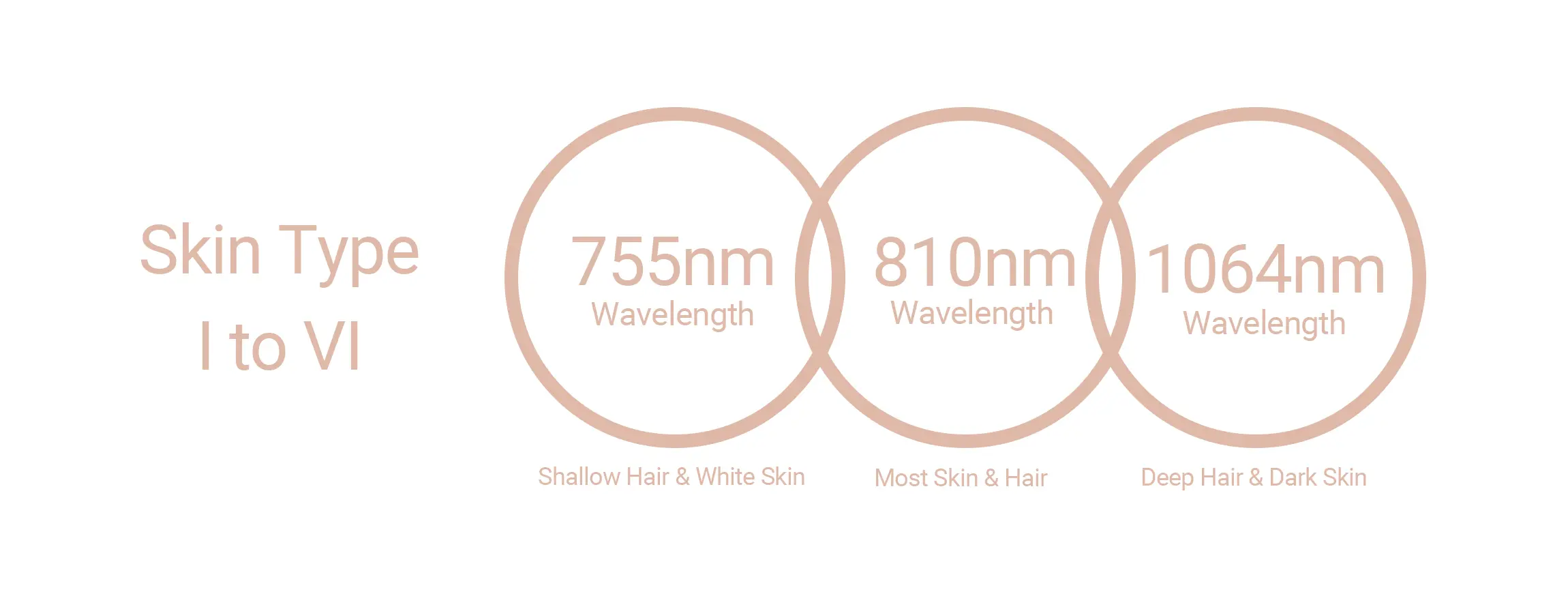
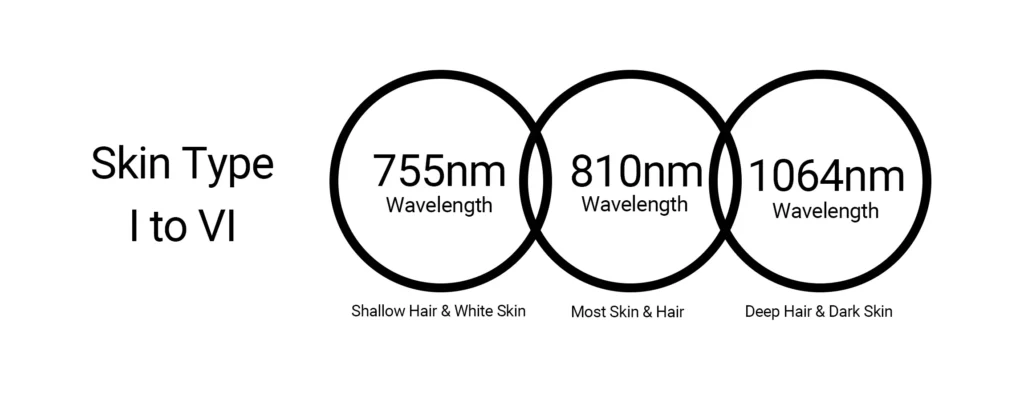
A tri-wavelength laser typically refers to a combination of 755nm + 808nm + 1064nm wavelengths, covering a wider range of skin types and hair types.
Seamlessly treats the full spectrum of the Fitzpatrick Scale, from porcelain skin with fine hair (755nm) to deep-toned skin with coarse follicles (1064nm).
Key Characteristics:
Specialized Precision: Optimized for specific chromophores, delivering targeted energy to either fine, light hair or deep-rooted follicles.
Cost-Efficient Entry: Generally offers a lower initial capital expenditure (CAPEX), making it an accessible entry point for boutique studios.
Simplified Maintenance: With a single optical path, these systems often benefit from straightforward technical servicing.
Ideal For:
Boutique Clinics: Establishments with a localized, homogeneous clientele (e.g., focusing exclusively on specific skin phenotypes).
Budget-Conscious Startups: Emerging medspas looking to maximize their ROI while maintaining high clinical standards for a core target audience.
Supplementary Technology: High-end clinics that already own multi-platform systems and require a “dedicated workhorse” for high-volume, specific skin-type treatments.
| Feature | Single Wavelength | Triple Wavelength (755/808/1064) |
| Skin Tone Range | Limited (mostly fair to medium) | Universal (Type I – VI) |
| Hair Type | Primarily coarse/dark | Fine, Light, Coarse & Stubborn |
| Treatment Speed | Standard | 25% Faster (High-frequency) |
| Comfort Level | Moderate stinging | Maximum (Integrated Cooling) |
| Total Sessions | 8-10 sessions | 6-8 sessions |
What Should You Choose?
“If your goal is survival, go with single. If your goal is scale, go with triple.”
The consumer of 2026 is tech-savvy. They check TikTok and Instagram for “755 808 1064” before booking. Investing in a triple-wavelength system reduces your long-term marketing costs because the machine effectively “sells itself” through superior clinical outcomes.