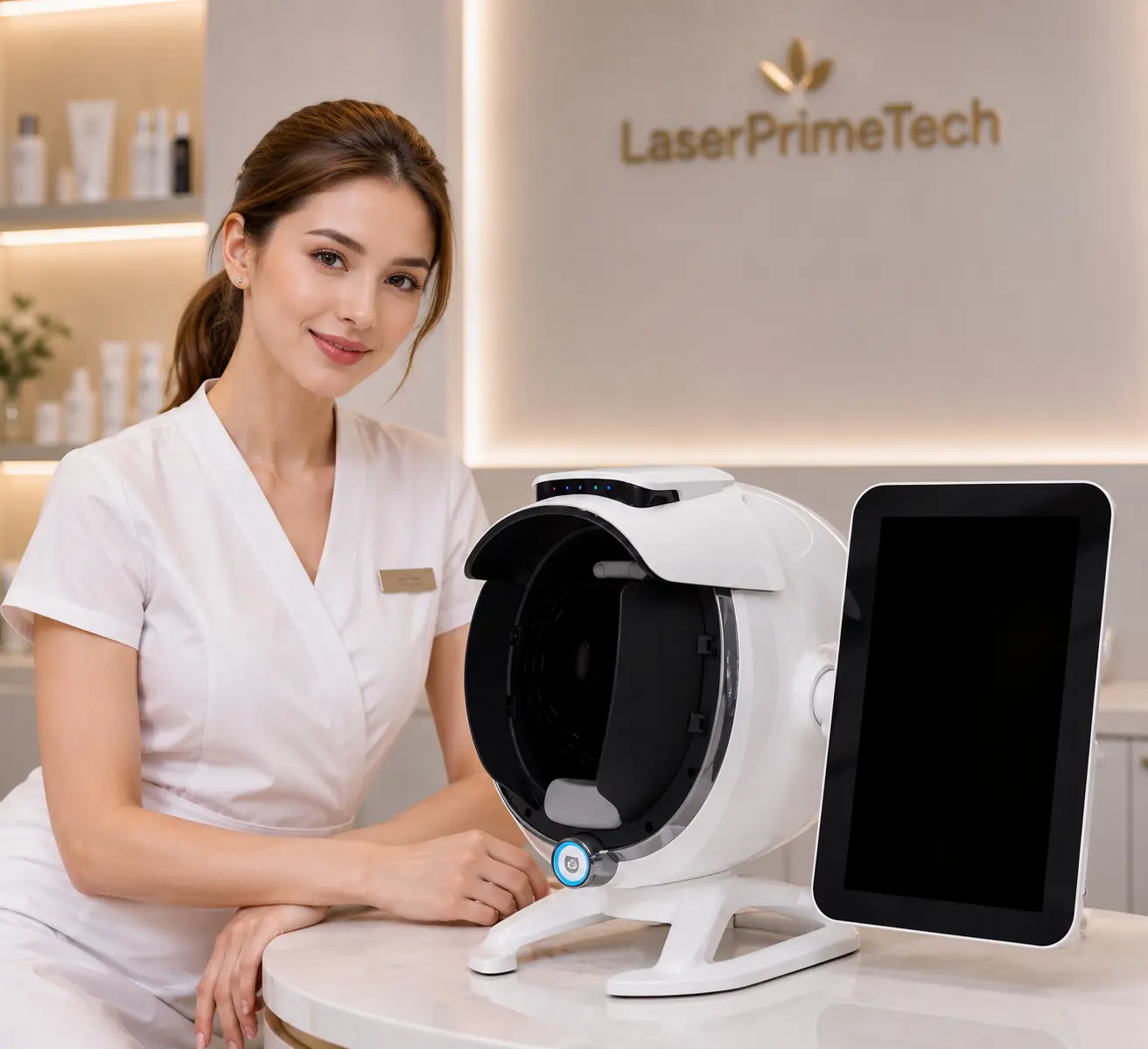
A skin analyzer is a professional diagnostic device capable of assessing various skin conditions and visually presenting—through images and data—skin issues that are invisible to the naked eye.
Modern skin analyzers integrate technologies such as high-definition imaging, UV detection, polarized light imaging, and AI-driven analysis. These features enable beauty industry professionals to accurately assess a client’s skin condition and tailor personalized skincare regimens.
Whether used in beauty salons, dermatology clinics, medical aesthetic centers, or by skincare practitioners, the skin analyzer serves as a vital tool for client consultations and management.
This guide provides a detailed overview of skin analyzers, explaining what they are, how they work, the specific conditions they detect, their benefits, and key factors to consider when purchasing a device.
What is a skin analyzer?
A skin analyzer is a specialized device designed to assess the condition of facial skin, visually displaying various skin issues.
Unlike a visual inspection with the naked eye, digital skin analyzers utilize specialized light spectra, high-definition cameras, and imaging technology to reveal skin details that are invisible under standard lighting.
Depending on the model, these devices can assess the following skin conditions:
– Skin moisture content
– Sebum (oil) levels
– Pore condition
– Fine lines and wrinkles
– Pigmentation
– Dull or uneven skin tone
– Acne-related issues
– UV damage
– Skin redness
– Skin texture (roughness)
– Spots and various skin blemishes
Features vary by device; professionals should carefully review the manufacturer’s specifications when making a purchase. Please contact us if you would like to learn more about our machines.
How does a skin analyzer work?

Professional skin analyzers combine imaging hardware with AI-driven analysis software.
1. Image Capture
The subject’s face is positioned in front of the camera or imaging system, and the device captures high-resolution images of the skin.
2. Specialized Lighting
Advanced skin analyzers utilize various lighting modes, such as:
Visible light
Polarized light
UV light
Cross-polarized light
Different lighting conditions highlight specific visual characteristics of the skin, making it easier to identify various skin issues.
3. Digital Image Analysis
The captured images are processed using the device’s built-in software. System algorithms identify and quantify specific skin characteristics.
4. Skin Analysis Report
Analysis results can be displayed on a computer, tablet, or the device’s built-in screen. Some devices generate intuitive reports that visualize various skin parameters. They can also store client information, facilitating post-treatment comparisons.
Beauty salons can use these reports during consultations to explain potential skin issues and recommend appropriate treatment plans or products.
What can a skin analyzer detect?
Specific detection capabilities depend on the device model; however, professional skin analyzers can generally assess the following key skin conditions:
Skin Moisture
The device can identify visible signs of skin dryness and dehydration.
Moisture data helps beauty salons recommend appropriate hydrating treatments, facial procedures, and moisturizing skincare products to clients.
Sebum (Oiliness)
Some devices can detect the distribution of oil on the face.
This makes it easy to identify areas with excessive oil production and formulate a suitable skincare regimen.
Pores
Digital imaging clearly displays pores, allowing for easy visualization of pore conditions across different areas of the face.
Pigmentation and Spots
High-performance devices can detect issues such as pigmentation, spots, and uneven skin tone.
These results serve as valuable references when discussing spot-fading treatments or skin texture improvement with clients.
Fine Lines and Wrinkles
High-definition imaging reveals fine, dry lines and wrinkles that are often difficult to see with the naked eye.
UV-Induced Skin Damage
Some professional devices use UV imaging to provide a clear view of subcutaneous pigmentation and UV-related skin damage.
Skin Redness
Certain devices can highlight areas of redness, aiding in a more comprehensive assessment of the client’s skin condition.
What are the benefits of using a skin analyzer?
More detailed consultations
Images and data captured by the device allow for a more comprehensive and clear explanation of skin conditions.
Beauty salons can present these images and results to visually demonstrate the client’s actual skin condition.
Personalized skincare recommendations
Everyone’s skin is unique.
Using a skin analyzer to gather complete skin data before recommending products or treatments enables the provision of tailored advice.
Visual comparison of skin changes before and after treatments
A highly practical feature is the ability to compare skin photos taken at different stages.
Storing “before-and-after” images allows clients to see the actual improvements resulting from the treatment.
Easier and clearer communication with clients
Visible test results make communication simple and easy to understand.
Clients can see the true state of their skin firsthand, which builds greater trust and credibility.
Increased client acceptance of treatments
Skin analysis can be integrated into the entire facial care or medical aesthetics consultation process.
This not only standardizes the consultation workflow but also helps clients better appreciate the value of the treatments.
Key Features to Look for When Buying a Skin Analyzer
Skin analyzers vary significantly in functionality; when making a purchase, it is recommended to focus on the following aspects:
1. High-Definition Camera
Image clarity is crucial; only with sharp, stable image quality can skin details be captured accurately. When buying, pay close attention to camera resolution, image quality, and shooting stability.
2. Multiple Imaging Modes
The more lighting modes a device supports, the more comprehensive the analysis.
Opt for instruments that offer various modes—such as natural light, polarized light, and UV light—to detect skin issues invisible to the naked eye.
3. Professional, User-Friendly Analysis Software
Software is the core of the analyzer; effective software should include these features:
Automatic detection and analysis, skin data scoring, visual report generation, before-and-after comparisons, client profile archiving, data storage, and treatment progress tracking.
4. Simple Operation and Intuitive Interface
An overly complex interface can significantly reduce the efficiency of client reception.
A high-quality skin analyzer is easy to use, allowing the entire process—capturing images, analyzing, and generating reports—to be completed quickly without delaying the consultation.
5. Built-in Client Profile Database
Ideal for long-term use in beauty salons and clinics. It allows for the storage of every scan record, facilitating follow-up reviews, skin change comparisons, and precise tracking of treatment results.
6. Ability to Generate Professional Analysis Reports
Capable of automatically generating clear, intuitive skin reports that make it easy to explain skin issues and treatment plans to clients; this enhances professionalism and builds client trust.
How to Choose the Right Skin Analyzer for Your Business
There is no “one-size-fits-all” device; the right choice depends on your specific operational context.
Beauty Salons
Prioritize ease of use, rapid analysis speed, visually appealing reports, client profile storage, and before-and-after comparison capabilities, all while keeping the purchase cost reasonable.
Medical Aesthetics Clinics
Opt for higher-end equipment with superior imaging quality, professional analysis software, and comprehensive data management systems; reliable technical support and after-sales service are also essential.
Skincare Consultation Services
If the device is primarily used for consultations and product recommendations, ease of use and detailed, comprehensive analysis reports are more important than high-end hardware specifications.
High-Traffic Facilities
For establishments serving a large volume of clients daily, focus on:
Fast analysis speeds, durable hardware, stable software performance, robust data storage and client profile management, and comprehensive after-sales support.
Conclusion
A skin analyzer transforms skincare consultations—previously reliant solely on verbal explanations—into a dialogue backed by visible data. By combining imaging technology with analysis software, it not only reveals the skin’s true condition to the client but also facilitates better communication and enables the tracking of long-term skin changes.
When selecting a skin analyzer, do not focus exclusively on technical specifications or price. Factors such as image quality, software usability, ease of operation, device stability, and compatibility with your business model are equally important.
For professional skincare salons, a high-quality skin analyzer should do more than just generate a report; it must be genuinely integrated into the entire consultation and client care process to deliver real, practical value.
FAQ About Skin Analyzer Machines
- What is a skin analyzer machine used for?
A skin analyzer machine is used to capture and analyze images of the skin and help professionals evaluate characteristics such as pores, pigmentation, oil, hydration, wrinkles, redness, and skin texture.
- Is a skin analyzer machine accurate?
The accuracy depends on the imaging technology, software, calibration, environmental conditions, and operating procedure. It should be used as a professional assessment aid rather than the sole basis for medical diagnosis.
- Can a skin analyzer detect dehydration?
Some skin analysis systems provide hydration-related measurements or visual assessments. The exact capability depends on the technology used by the machine.
- Can a skin analyzer detect pigmentation?
Many advanced skin analyzers use specialized imaging to make pigmentation and uneven skin tone more visible.
- Is a skin analyzer suitable for beauty salons?
Yes. Beauty salons can use skin analyzers for consultations, skincare recommendations, treatment planning, and before-and-after comparisons.
- How often should skin analysis be performed?
There is no universal schedule. Many businesses perform an initial analysis and repeat it periodically or before and after a treatment program to monitor changes.