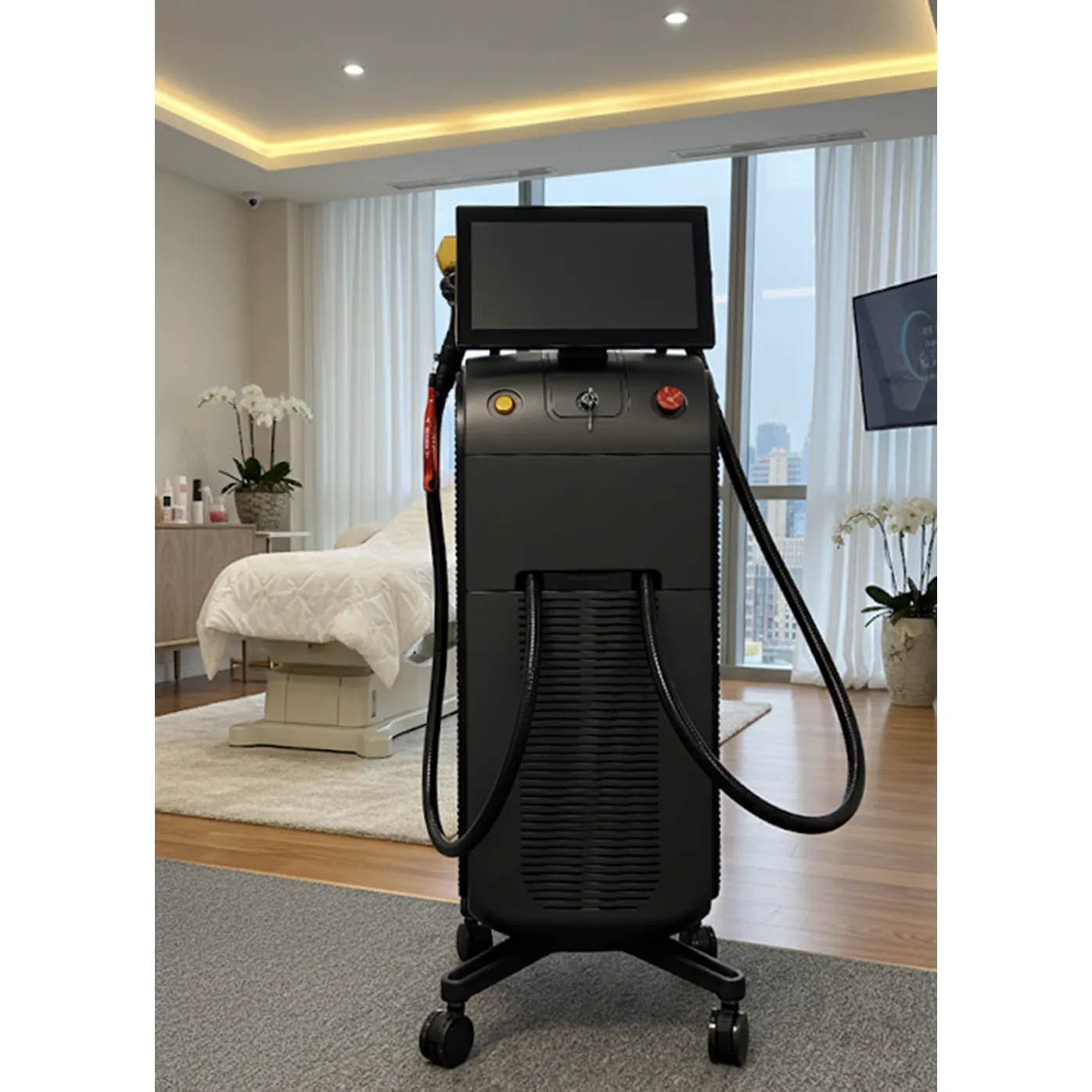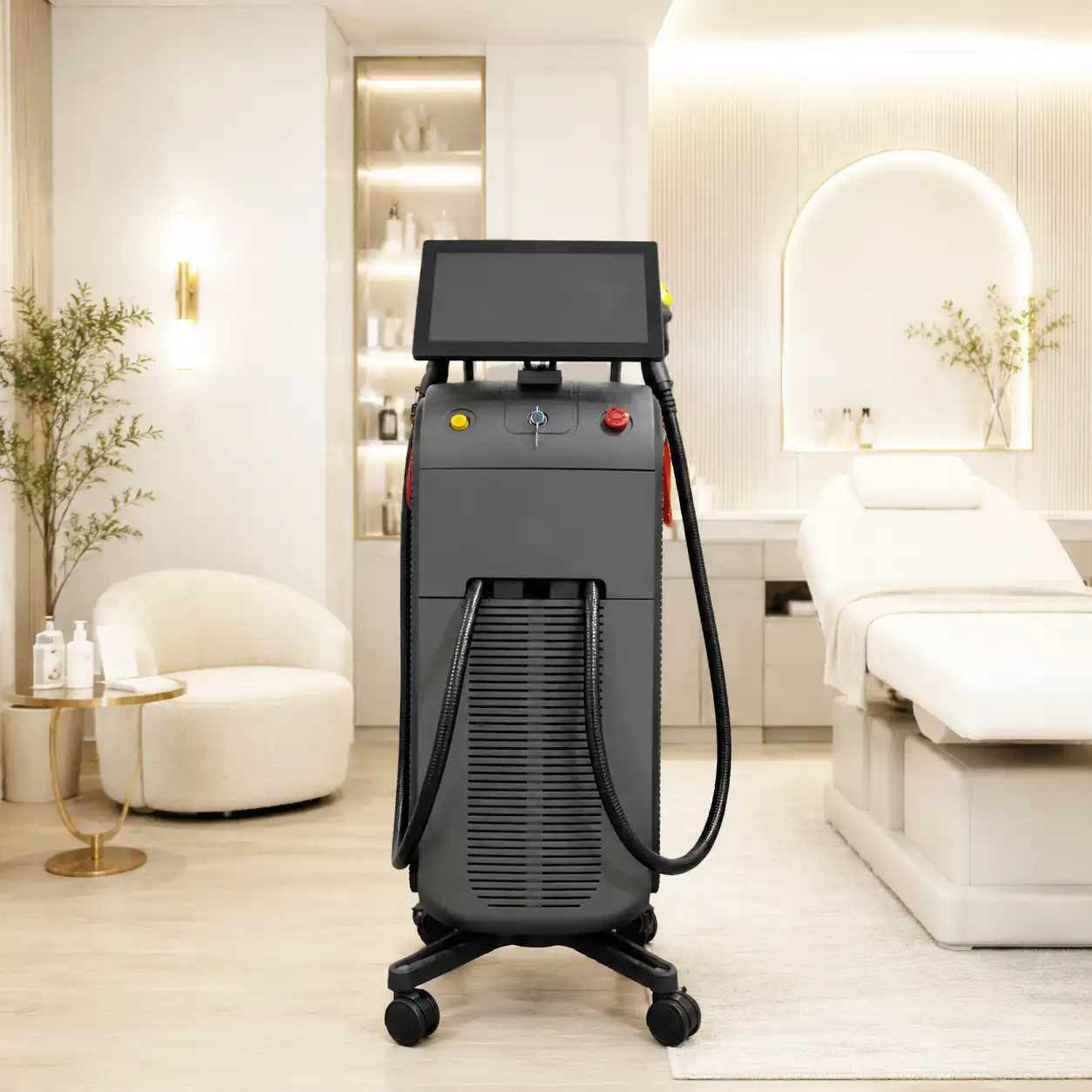
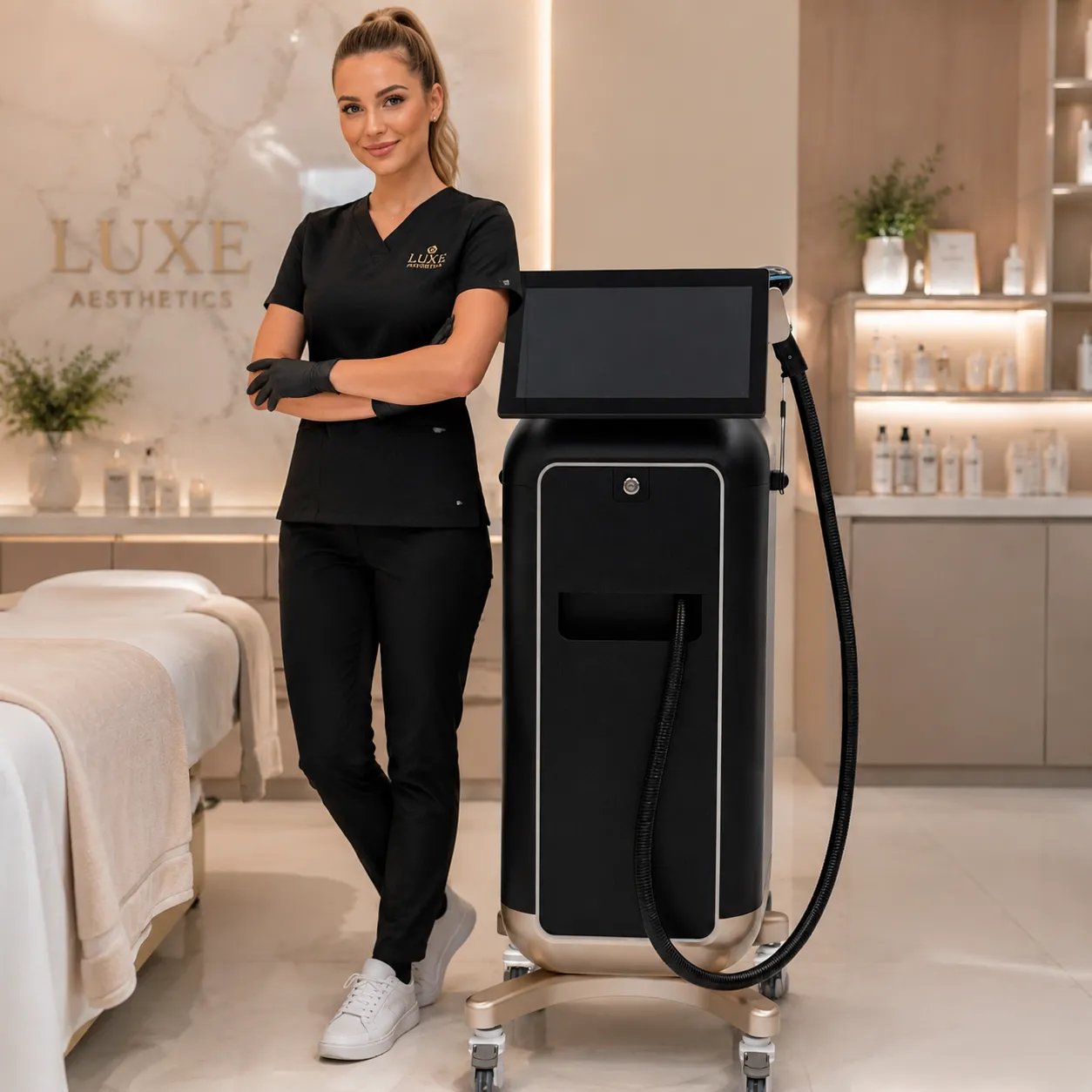
Selecting the right laser hair removal machine is a pivotal investment for beauty salons and aesthetic clinics. Instead of focusing solely on upfront purchase costs, business owners need to evaluate core performance, client experience, maintenance expenses and long-term return on investment (ROI). A high-quality professional device directly determines service quality, customer satisfaction and revenue growth.
With diverse laser devices and suppliers flooding the market, mastering key comparison metrics helps salon owners pick equipment that aligns with their business positioning and growth goals.
1. Core Laser Technology Comparison
Laser technology is the foundation of treatment effectiveness and safety. Three mainstream professional hair removal technologies are widely used in the beauty industry, with distinct pros and cons.
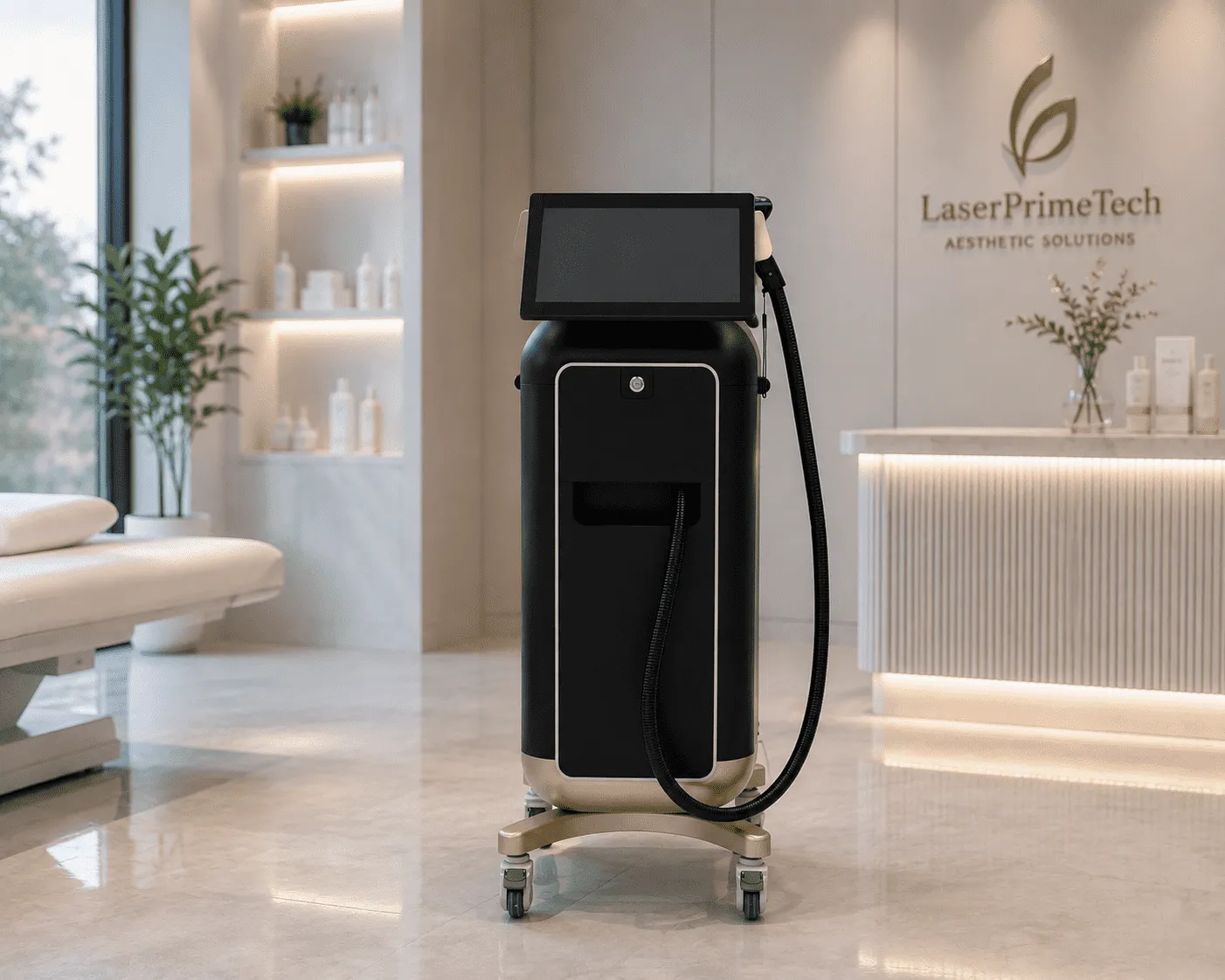
1.1 Diode Laser (Top Choice for Most Salons)
Diode laser machines are the most popular option for commercial beauty businesses, balancing excellent safety, versatility and cost-effectiveness. Most standard models adopt an 800–810nm wavelength, while upgraded versions support 755nm, 808nm and 1064nm multi-wavelength switching to adapt to all skin tones and diverse hair conditions.
Key Advantages:
- Compatible with all skin tones (light to dark skin)
- Delivers stable and permanent hair reduction results
- Fast full-body treatment speed, high customer throughput
- Low failure rate and minimal daily maintenance
- High long-term ROI for commercial use
1.2 Alexandrite Laser
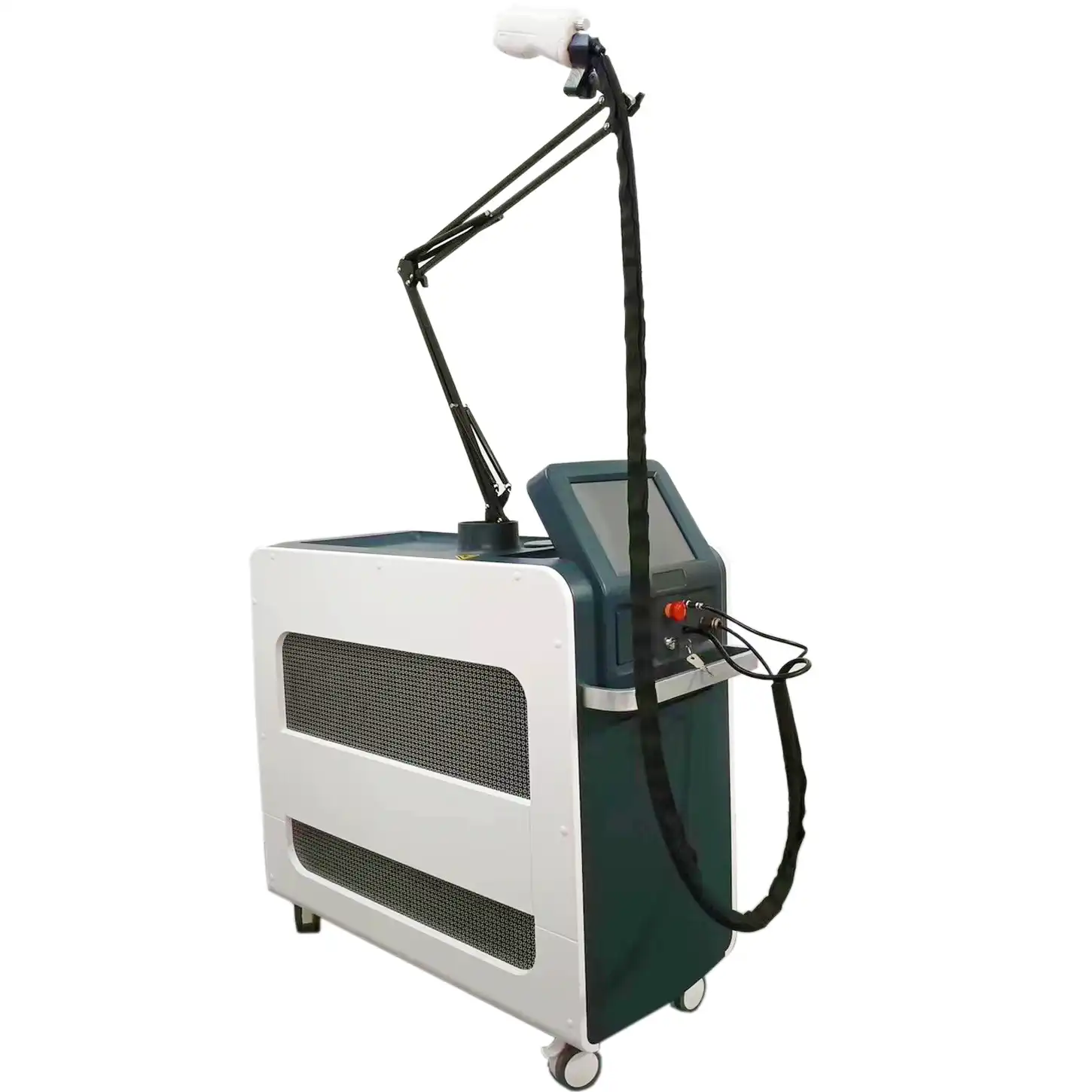
Featuring a single 755nm wavelength, alexandrite lasers offer ultra-fast treatment speeds and work best for clients with light skin and dark hair. Its main limitation is poor adaptability for dark skin tones, as excessive melanin absorbs laser energy easily, raising skin irritation risks. It is only suitable for salons with a single customer group of fair-skinned clients.
1.3 IPL System
IPL uses broad-spectrum light instead of precise laser wavelengths. It has a lower purchase price but suffers from unstable treatment effects, slower results and limited professionalism. For commercial salons pursuing standardized, high-quality services, IPL is not a long-term ideal choice due to inconsistent customer experience.
2. Treatment Speed & Daily Client Capacity
Treatment efficiency directly dictates a salon’s daily revenue and operating capacity. A high-speed machine enables technicians to serve more clients in less time, cutting waiting times and boosting profits without increasing labor costs.
Key parameters to compare:
- Handpiece spot size (larger size = faster treatment)
- Laser repetition rate
- Maximum stable energy output
- Cooling synchronization efficiency
- Full-body treatment cycle time
Premium multi-wavelength diode lasers greatly shorten single treatment duration, effectively increasing daily client reception volume and maximizing room utilization.
3. Cooling System Performance (Core for Client Comfort)
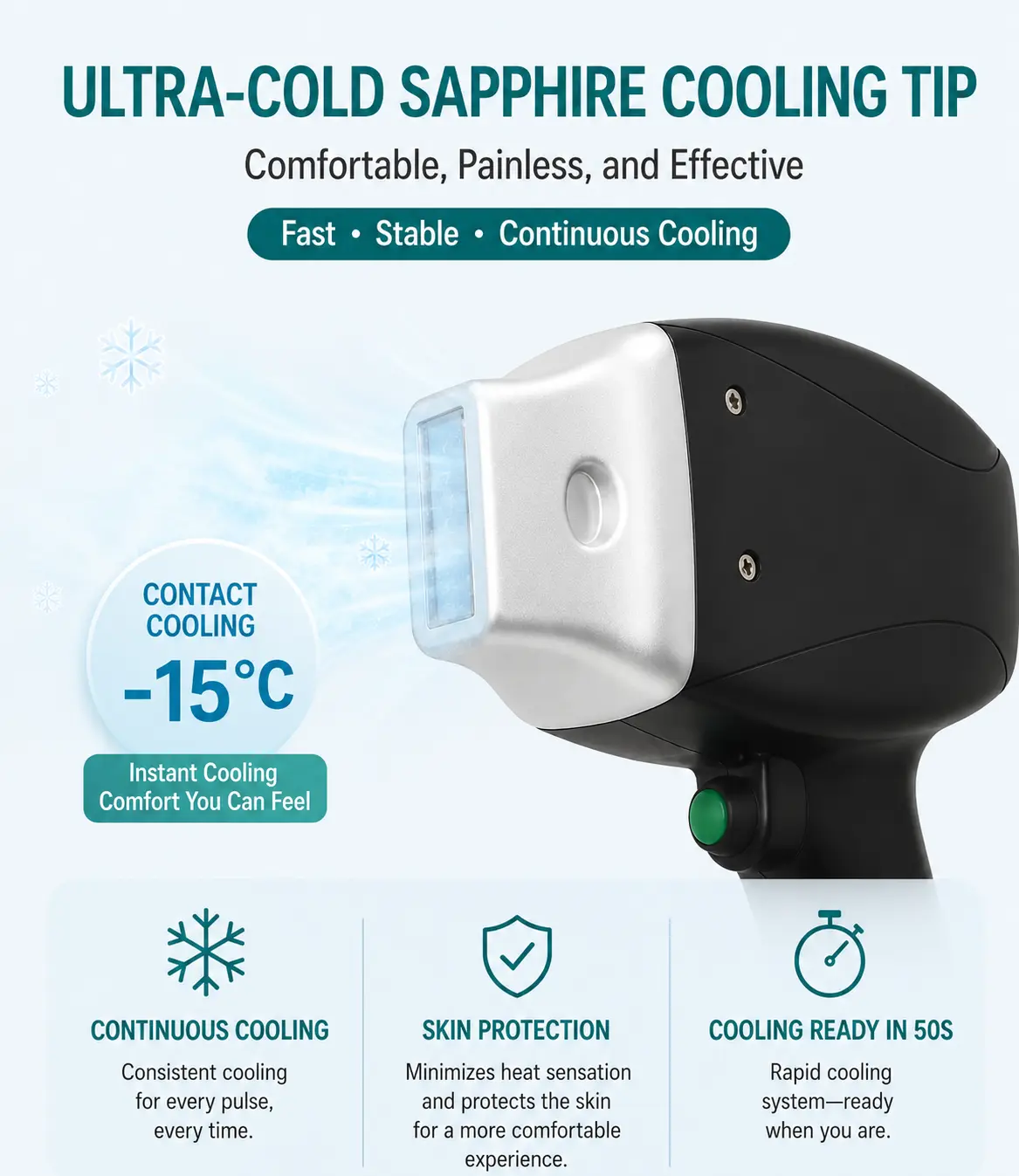
Pain-free, comfortable treatment is a key factor for repeat customer visits and word-of-mouth referrals. Poor cooling systems cause stinging, redness and skin damage, reducing client satisfaction drastically.
Professional mainstream cooling technologies: Sapphire contact cooling, circulating water cooling, air cooling and intelligent constant-temperature cooling systems.
Functions of high-performance cooling systems:
- Significantly reduce treatment pain and discomfort
- Protect epidermal skin and avoid burns or irritation
- Support higher energy output for better hair removal effects
- Improve client experience and repurchase rate
4. Machine Reliability & Maintenance Costs
Low-priced equipment often brings hidden long-term costs such as frequent failures, high maintenance fees and suspended appointments. When selecting machines, prioritize long-term stability over low upfront cost.
Key evaluation indicators:
- Service life of the laser core
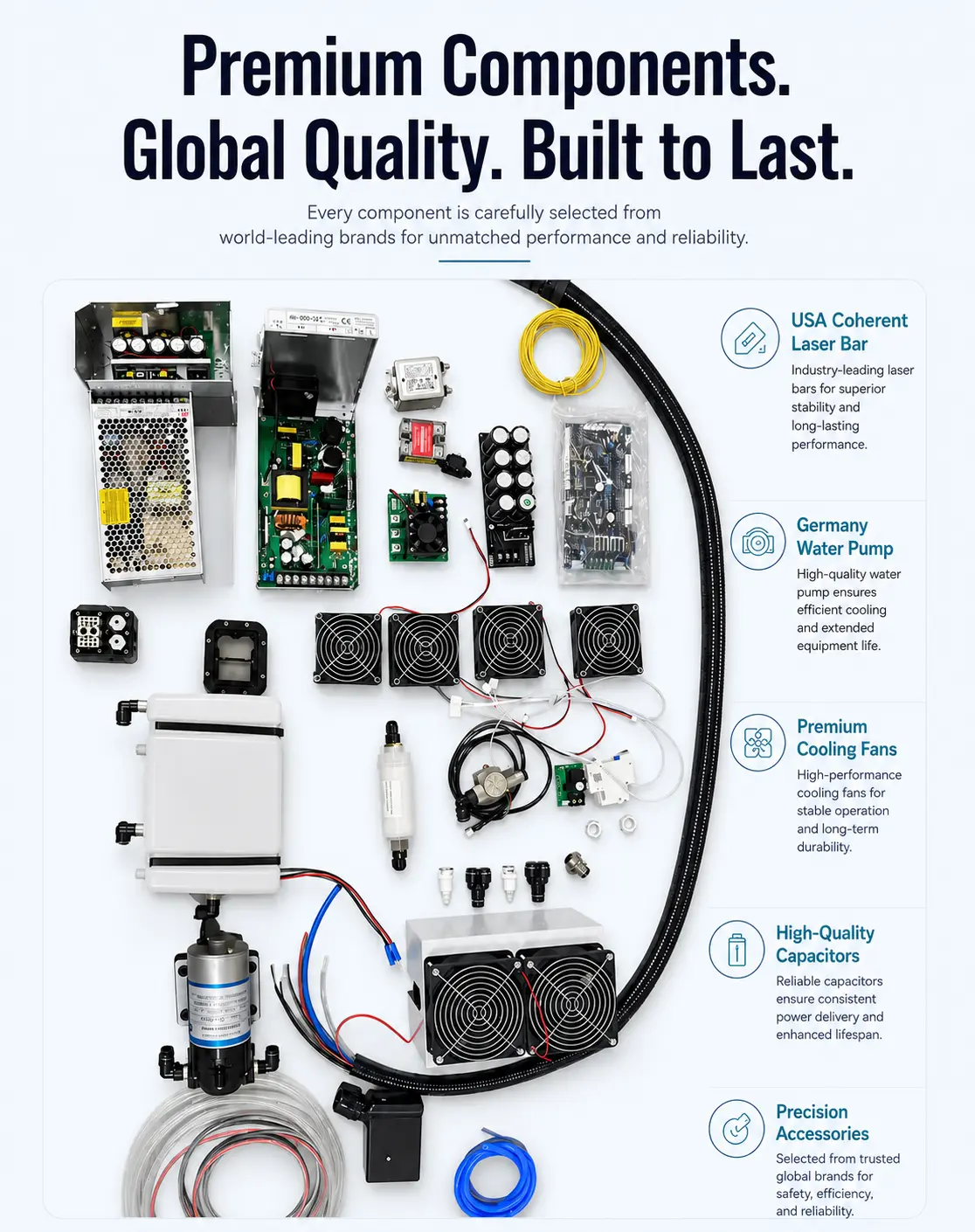
- Stability of cooling and operating systems
- Availability and price of spare parts
- Official warranty policy and cycle
- Supplier’s after-sales technical support capability
Stable equipment minimizes downtime, ensures normal daily operations and avoids customer loss caused by equipment failures.
5. Operation Interface & Training Threshold
User-friendly equipment reduces training costs and operational errors, suitable for rapid employee replacement and standardized salon management.
Key comparison points:
- Screen definition and intuitive interface design
- Intelligent parameter matching for different skin/hair types
- Multi-language system support (for international business)
- Complete operation guidance and technical training
An intelligent, easy-to-operate system helps new technicians master skills quickly and unify service standards.
6. Comprehensive Cost & Long-Term ROI Analysis
Upfront equipment cost is only a small part of business investment. True profitability depends on long-term comprehensive ROI.
Complete ROI assessment dimensions:
- Initial equipment purchase cost
- Local market treatment pricing
- Average monthly client reception volume
- Daily consumable loss and maintenance expenses
- Equipment service life
High-efficiency, stable mid-to-high-end machines can quickly recover costs through stable customer flow and package sales, achieving higher long-term profits than cheap low-performance equipment.
7. Supplier Qualification & After-Sales Service
A reliable supplier is as important as the equipment itself, determining long-term service quality and operational security.
Must-ask questions before cooperation:
- Brand manufacturing experience and industry qualifications
- Official product certification and compliance documents
- Real salon customer cases and market reputation
- Customization, installation and shipping services
- 24/7 after-sales technical support and fault maintenance
Real Business Case: Salon Efficiency & Profit Upgrade
A local beauty salon in Spain previously used outdated hair removal equipment, featuring slow treatment speed and limited daily client capacity, which restricted business expansion.
After upgrading to a professional multi-wavelength diode laser machine with an intelligent cooling system, the salon greatly shortened single treatment time and launched diversified full-body hair removal packages. Within several months, customer booking volume increased significantly, and the profit margin of the treatment room was effectively improved. The salon owner prioritized equipment efficiency, stability and long-term business value rather than low initial prices.
Final Conclusion
Comparing laser hair removal machines requires systematic evaluation of technology, efficiency, comfort, stability, supplier service and ROI, instead of simply comparing parameters and prices.
The most suitable equipment is the one that matches your salon’s business model, target customer groups, service pricing and future development plans. Reasonable equipment selection can help salons attract more clients, optimize service experience and build a sustainable profitable business project.
FAQs
1. What is the best laser hair removal machine for beauty salons?
Multi-wavelength diode laser machines are the best choice for most commercial salons, thanks to their wide skin tone adaptability, stable effects and high efficiency. The optimal model should be selected based on your target market, budget and daily treatment volume.
2. What core factors should be checked before purchasing?
Focus on laser wavelength and technology, treatment speed, cooling performance, equipment stability, maintenance cost, supplier after-sales support and long-term ROI, with comprehensive consideration of price and practical value.
3. Is high-priced professional laser equipment worth investing in?
Yes. High-quality professional machines feature lower failure rates, faster treatment efficiency, lower long-term maintenance costs and better client experience, which bring more stable and sustainable profits for salons.
4. How many clients can a professional laser machine serve per day?
The daily client volume depends on treatment items, machine performance and scheduling. A standard commercial diode laser machine can support high-frequency repeated treatments and meet the service demand of busy salons.
5. What key questions should I consult suppliers about?
Consult equipment parameters, warranty cycle, free training support, industry certifications, spare parts supply, real customer cases and full-cycle after-sales service details.