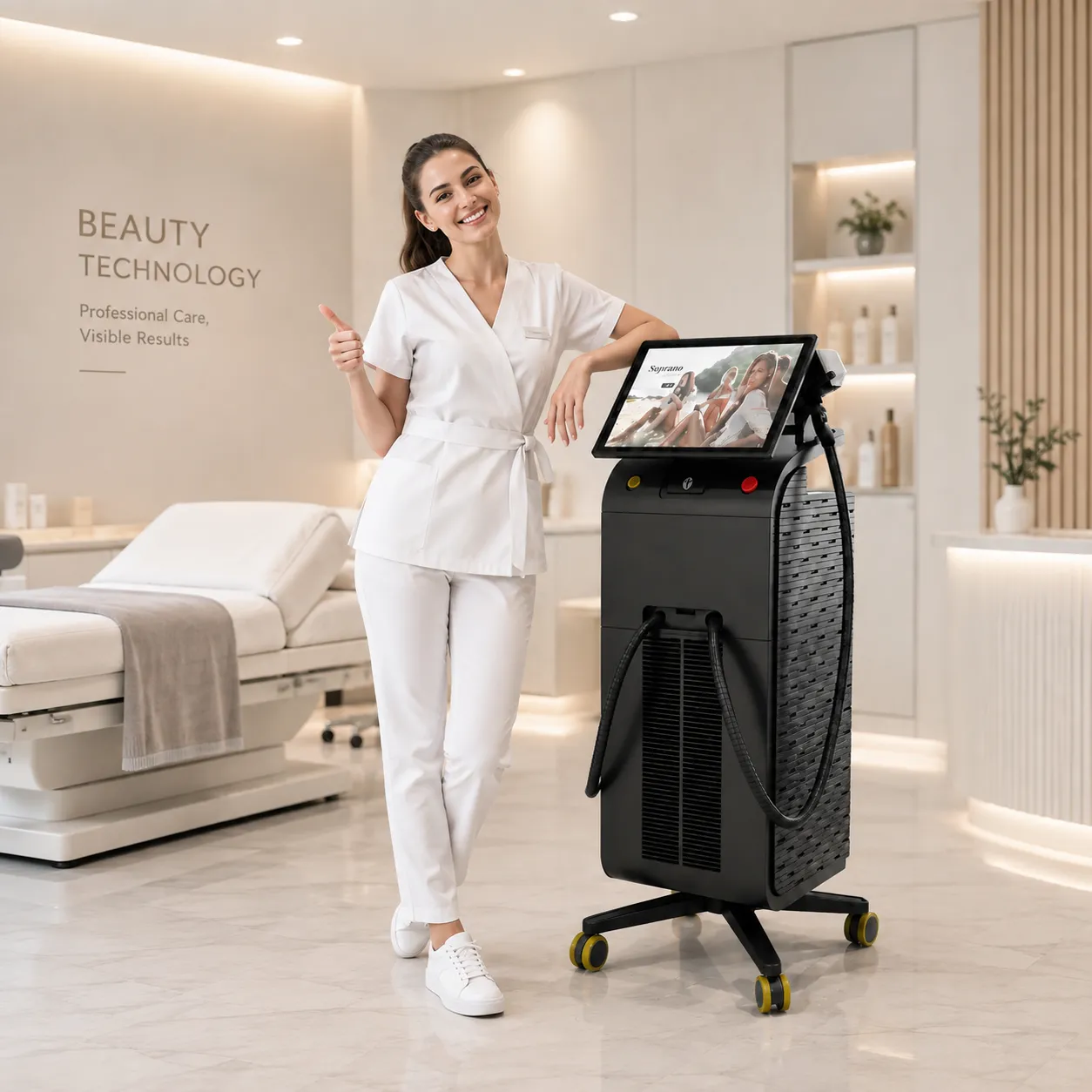
Diode laser hair removal machines are core high-value equipment for beauty salons and aesthetic clinics. Standardized operation, regular cleaning, efficient cooling and scientific preventive maintenance are key to stabilizing equipment performance, reducing failure downtime and extending service life, maximizing the long-term investment value of the device.
For clinics with daily high-frequency treatment volume, standardized maintenance not only prolongs equipment lifespan but also ensures consistent treatment effects, avoids sudden shutdowns, and guarantees stable daily business operation.
1. Importance of Diode Laser Machine Maintenance
Professional diode laser machines support continuous repeated use, but long-term high-load operation will cause wear on core components including laser modules, handpieces, cooling systems, fans, sensors and circuit systems. Lack of daily maintenance will gradually trigger performance degradation and sudden failures.
Standard and consistent maintenance brings multiple core benefits:
- Stable and consistent equipment operating performance
- Greatly reduced unexpected downtime and failure risks
- Sustained high efficiency of the cooling system
- Prolonged service life of core components
- Reduced unnecessary repair and replacement costs
- Stable treatment scheduling and improved customer experience
- Higher long-term return on equipment investment
Equipment maintenance does not rely on complex operations, but on long-term adherence and standardized routines.
2. 12 Core Maintenance Rules to Extend Equipment Lifespan
2.1 Maintain a Normal Cooling System (Core Priority)
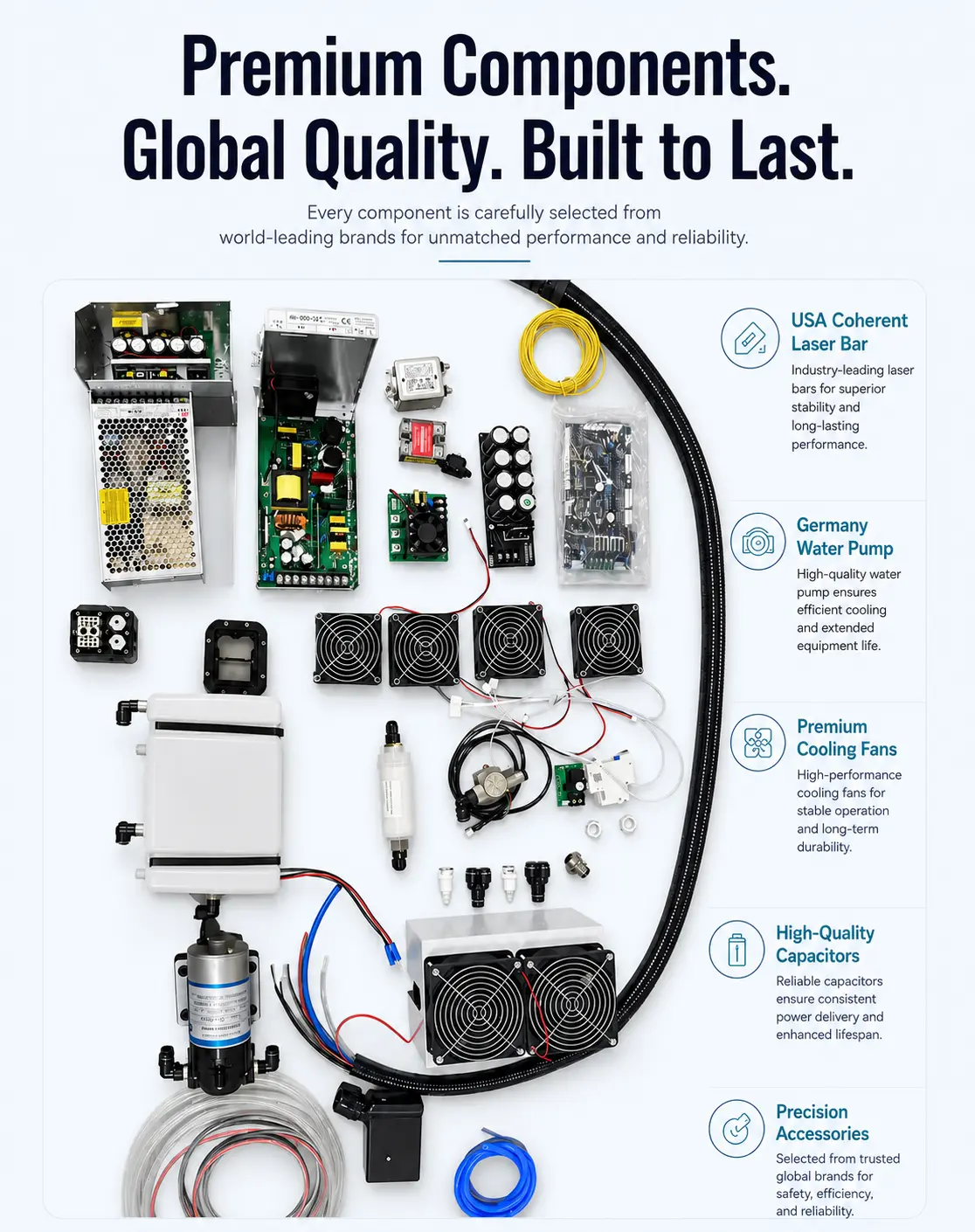
The cooling system is the most critical component of a diode laser machine. The laser module generates massive heat during operation; a faulty cooling system will cause overheating, performance attenuation and component burnout.
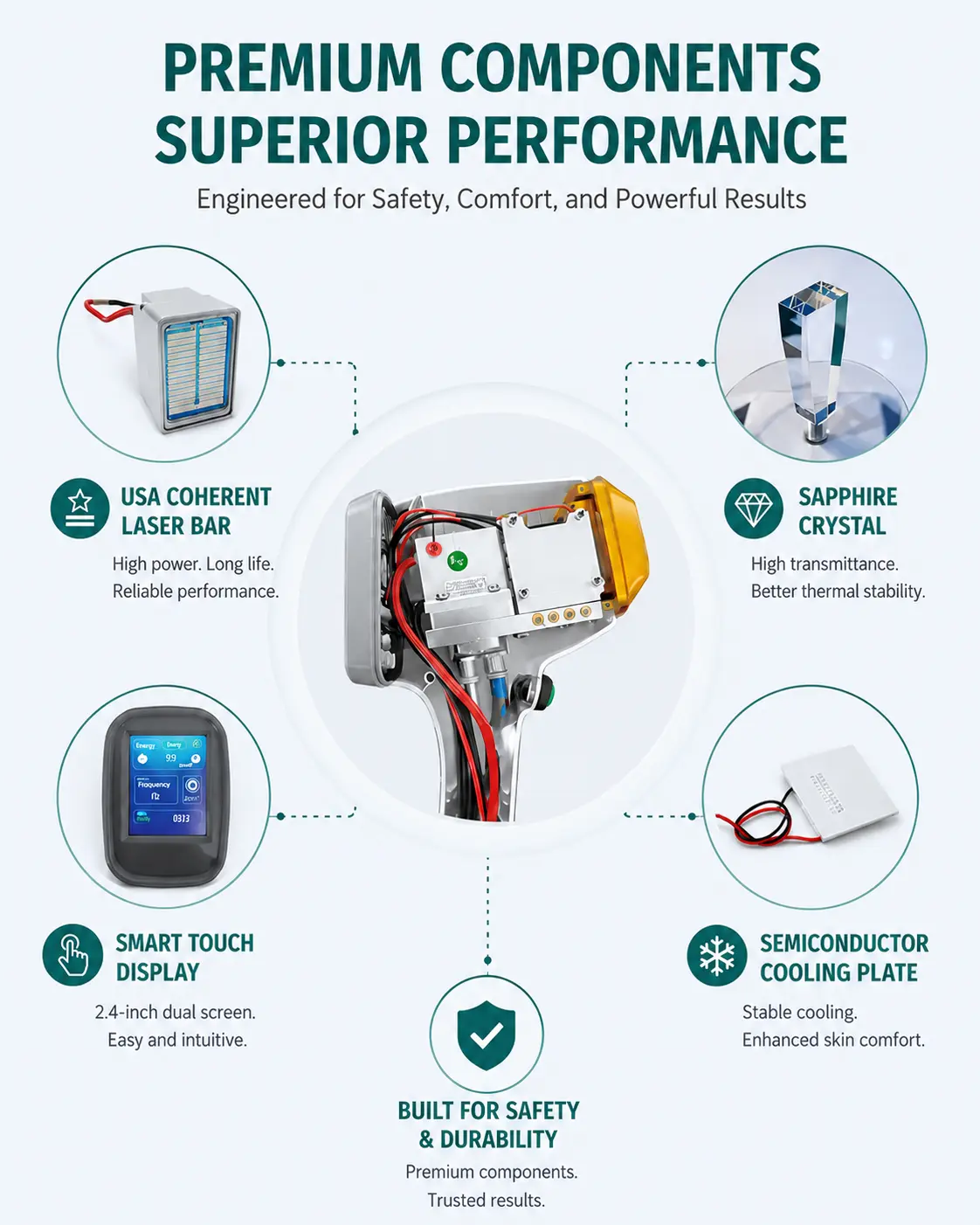
Most devices adopt water circulation, air cooling, semiconductor cooling or contact cooling technology. Daily inspection must ensure:
- No temperature or cooling fault warnings on the screen
- Air vents and heat dissipation openings are unblocked and dust-free
- Coolant and water levels meet the manufacturer’s standard range
- The equipment is placed in a well-ventilated environment
- Cooling performance remains stable during continuous treatment
Note: Once an overheating warning appears, stop treatment immediately for troubleshooting. Do not operate with faults to avoid expanding equipment damage.
2.2 Regularly Clean the Laser Handpiece
As the most frequently used component, the handpiece treatment window is prone to residue accumulation of cooling gel, skin oil and dust. Long-term dirt buildup will block laser output, affect treatment effects and even cause equipment failures.
Daily standardized cleaning steps (follow official instructions):
- Check the treatment window for residues after each use
- Clean residual gel and dirt with designated cleaning supplies
- Prohibit abrasive tools and corrosive chemical cleaners
- Inspect the handpiece for cracks, scratches and damage
- Place the handpiece stably in a designated position when idle
2.3 Adopt Standard and Appropriate Treatment Parameters
The machine’s adjustable parameters (fluence, pulse duration, frequency, operating mode) must be matched with the customer’s skin type, hair condition and treatment area. Blindly pursuing high parameters will not improve treatment effects but cause excessive thermal load on the laser module, accelerating component aging.
All operators must receive professional training, strictly follow the manufacturer’s parameter setting guidelines, and avoid arbitrary over-limit operation.
2.4 Never Ignore Equipment Temperature Warnings
In high-frequency continuous use scenarios, temperature warnings are the most important fault reminder. Once triggered, check the cooling system, coolant capacity, ventilation status, ambient temperature and equipment error codes in time. If the fault cannot be eliminated quickly, contact professional technical support.
Continuous operation with overheating faults will turn minor problems into expensive maintenance failures.
2.5 Place the Equipment in a Qualified Working Environment
A good operating environment is the basis for long-term stable operation of the equipment. The placement environment must be clean, dry, dust-free and well-ventilated.
Prohibited placement scenarios:
- Next to high-temperature heat sources or direct sunlight for a long time
- Dusty and humid environments (easy to cause circuit short circuit)
- Unstable placement surfaces and positions with blocked ventilation
- Positions prone to water splashing on electrical components
Reserve enough heat dissipation space around the equipment to ensure smooth air circulation.
2.6 Inspect and Replace Coolant/Water on Schedule
For water-cooled laser machines, coolant and circulating water are key to heat dissipation. Different equipment has exclusive applicable coolant types and replacement cycles.
It is necessary to strictly follow the manufacturer’s requirements for water quality standards, coolant models, inspection cycles and replacement procedures. The use of unqualified coolant will cause pipeline blockage, reduced cooling efficiency and equipment failure.
2.7 Strictly Abide by the Rated Operating Conditions
All laser machines have fixed rated parameters including continuous working time, ambient temperature and duty cycle. Do not overwork the equipment for more appointments. Arrange treatment schedules reasonably according to the equipment’s heat dissipation cycle to ensure the machine runs within the standard working range.
2.8 Conduct Regular Professional Preventive Maintenance
Daily cleaning and simple inspection are not enough; regular professional maintenance is required for high-frequency used equipment to check hidden faults. The maintenance scope covers:
- Cooling efficiency and water circulation system
- Handpiece, treatment window and laser output stability
- Fans, filter dust accumulation and ventilation status
- Circuit connections, temperature sensors and internal core components
- Control system operating status
The maintenance frequency is adjusted according to daily usage, and the official maintenance schedule shall prevail.
2.9 Complete Professional Training for All Operators
Non-standard manual operation is one of the main causes of equipment premature aging. All staff must master standardized operations before taking up the post:
- Accurate parameter matching and adjustment methods
- Daily inspection and handpiece cleaning specifications
- Error code identification and temperature warning response measures
- Judgment timing for contacting technical support
Unified standard operating procedures (SOP) ensure consistent operation by all employees.
2.10 Protect the Laser Handpiece During Use and Storage
The handpiece is a vulnerable high-value component. Daily use must avoid dropping, cable pulling, random placement and excessive gel residue accumulation. Stop using immediately if the treatment window is scratched or damaged, and repair or replace it in time to avoid affecting business.
2.11 Keep Ventilation Systems Clean and Unblocked
Fans, filters and ventilation openings are easy to accumulate dust. Blocked air ducts will reduce heat dissipation efficiency and increase equipment operating load. It is necessary to regularly clean dust and sundries at ventilation positions, and reserve heat dissipation space according to installation specifications.
2.12 Establish a Complete Equipment Maintenance Record
Record all equipment maintenance content in detail, including cleaning time, cooling system inspection, coolant replacement, fault codes, repair records, parts replacement and technician suggestions.
Maintenance records can help track equipment operating status, identify frequent faults, and provide accurate data support for after-sales technical docking.
3. Standard Maintenance Frequency Classification
There is no unified full-scale maintenance standard for all laser machines. The maintenance cycle is formulated according to equipment model, cooling system and daily usage, and is divided into three levels:
3.1 Daily Routine Inspection (Operators)
Check equipment appearance, handpiece window cleanliness, cooling status, coolant water level, system error prompts and ventilation unblocked status before and after daily work.
3.2 Regular In-depth Inspection (Skilled Staff)
Regularly detect cooling efficiency, water circulation, fan and filter dust accumulation, circuit connection firmness and overall equipment cleanliness according to business volume.
3.3 Professional Technical Inspection (Authorized Technicians)
Regularly detect core technical indicators including laser output power, sensor sensitivity, internal component wear and cooling system operating accuracy in accordance with official standards.
4. Equipment Service Life Influencing Factors
The service life of a diode laser machine is not fixed. It is jointly determined by component quality, cooling system design, daily operating frequency, maintenance habits, working environment and after-sales service quality.
Clinics with standardized maintenance can achieve far longer equipment service life and more stable performance than neglected equipment. When purchasing equipment, do not only focus on the low initial price. Key assessment indicators include:
- Laser module and handpiece core quality
- Cooling system structural design
- Equipment workmanship and stability
- Warranty policy, spare parts supply and after-sales technical support
- Official maintenance difficulty and cycle
5. Practical Maintenance Case Study
A Spanish local beauty salon introduced a diode laser hair removal device and formulated a strict daily maintenance SOP for high-frequency business scenarios:
After daily work, the staff uniformly cleaned the handpiece window, inspected the cooling system, eliminated system fault prompts, and sorted out ventilation openings. The equipment was maintained strictly in accordance with the supplier’s cycle requirements without waiting for faults to occur.
Result: The equipment maintained stable long-term operation, with almost no sudden shutdown failures, effectively ensuring the continuity of customer appointments and improving business efficiency.
Core experience: Active preventive maintenance is far more effective than passive fault repair.
6. Five Common Maintenance Mistakes to Avoid
- Ignore cooling faults: Continue working with overheating warnings, causing component aging and burnout
- Neglect handpiece cleaning: Long-term residue accumulation affects laser output and treatment effects
- Block ventilation channels: Poor heat dissipation leads to increased equipment load and performance degradation
- Use unqualified coolant: Cause pipeline blockage and reduced cooling efficiency
- Untrained staff operation: Non-standard parameter setting and operation cause unnecessary equipment wear
7. The Value of Professional Supplier After-Sales Support
Equipment maintenance runs through the whole service life of the machine. High-quality after-sales service is an important guarantee for long-term stable operation, especially for cross-border purchasers.
Before purchasing equipment, confirm the supplier’s supporting services:
- Complete warranty coverage and effective cycle
- Timely technical support and fault response speed
- Spare parts supply and handpiece repair/replacement service
- Free operator training and standardized maintenance guidance
- System firmware upgrade and long-term troubleshooting support
8. Conclusion
Extending the service life of a diode laser hair removal machine relies on standardized daily operation and persistent preventive maintenance. Optimizing the cooling system, keeping the handpiece clean, using standard parameters, ensuring smooth ventilation, regular inspection and professional after-sales cooperation can fully guarantee the long-term stable performance of the equipment.
For beauty clinics, scientific maintenance is not only a technical operation, but also an effective means to protect equipment investment, reduce operating costs and stabilize service quality. When selecting equipment, comprehensive consideration of performance, quality, maintenance cost and after-sales service can maximize the long-term commercial value of the device.

9. FAQ
Q1: What are the core ways to extend the lifespan of a diode laser machine?
Standard daily cleaning, stable cooling system operation, scientific parameter setting, unblocked ventilation, regular preventive inspection and professional after-sales maintenance are the core measures, and all operations must comply with official manufacturer specifications.
Q2: How often does the laser machine need professional maintenance?
Daily basic inspection is completed by on-site operators; the cycle of professional in-depth maintenance is determined by equipment model and usage frequency, and the manufacturer’s official maintenance manual shall prevail.
Q3: Does the cooling system directly affect equipment lifespan?
Yes. The laser module generates a lot of heat during operation. A failed cooling system will cause overheating attenuation of core components, which is the main cause of reduced equipment life and frequent failures.
Q4: Can the diode laser machine work continuously all day?
Professional salon equipment supports high-frequency use, but continuous over-limit operation is prohibited. It is necessary to follow the rated duty cycle and cooling cycle requirements to avoid long-term high-load operation.
Q5: What key after-sales problems should be confirmed before purchasing equipment?
Focus on maintenance cycle standards, cooling system maintenance requirements, warranty scope, spare parts supply, handpiece after-sales service, technical fault response efficiency and operator training support.