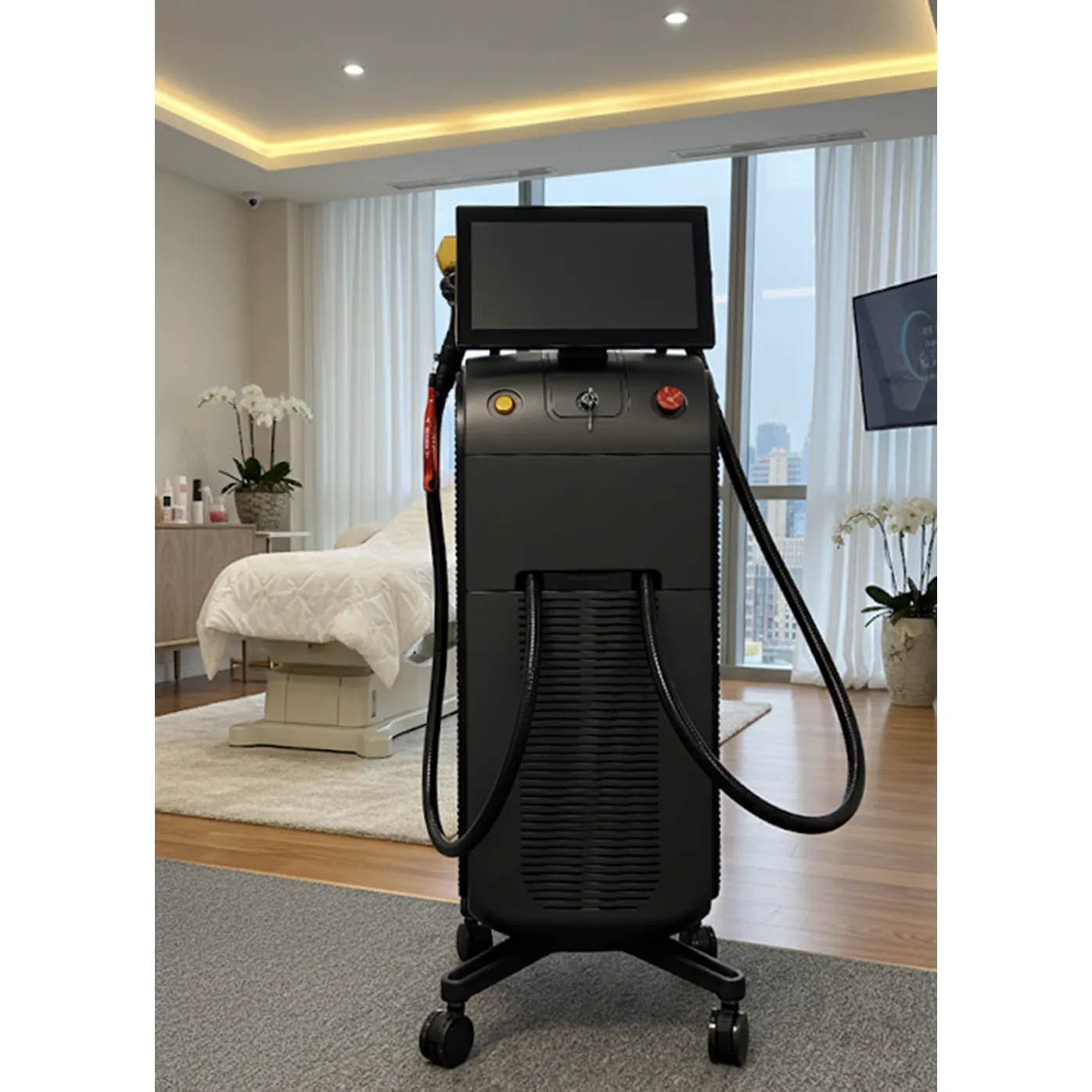
The market for laser hair removal is expanding year by year, with an increasing number of consumers seeking the procedure. Currently, over 68% of aesthetic clinics worldwide offer laser hair removal services, making it one of the most frequently performed non-invasive cosmetic procedures. Female consumers account for approximately 72% of total treatments, while male participation has reached 28%. Globally, more than 18 million laser hair removal procedures are performed annually (according to Business Research Insights).
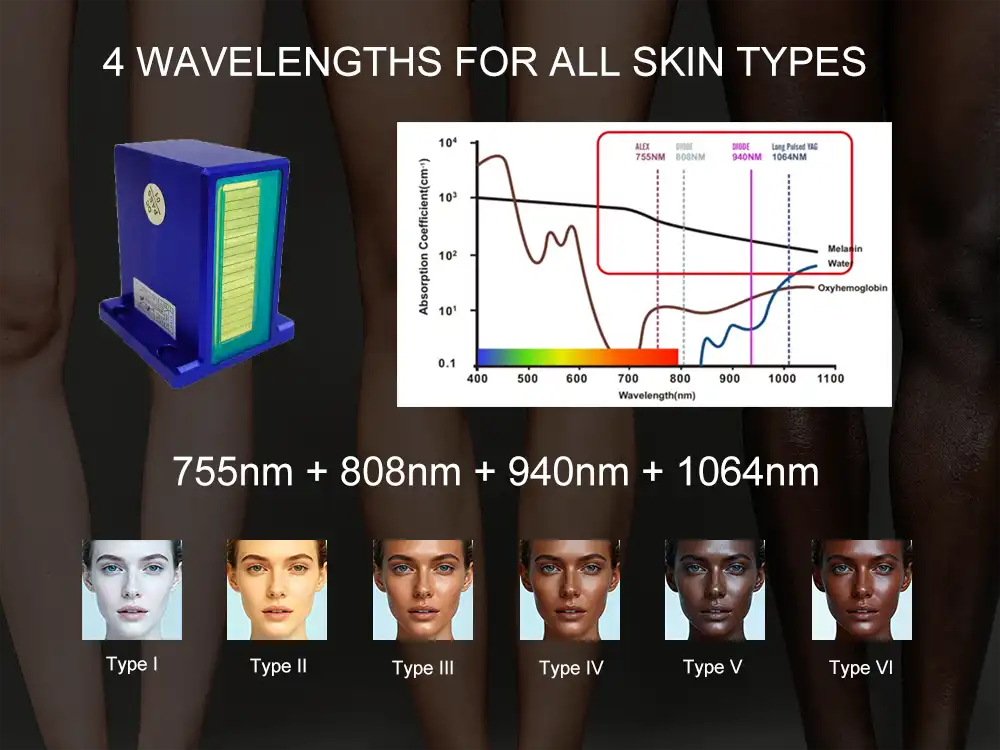
To cater to consumers with diverse skin tones, suppliers have introduced 4-wavelength systems (755/808/1064/940nm).
The following sections detail the technical principles, target demographics, and competitive advantages of this technology.
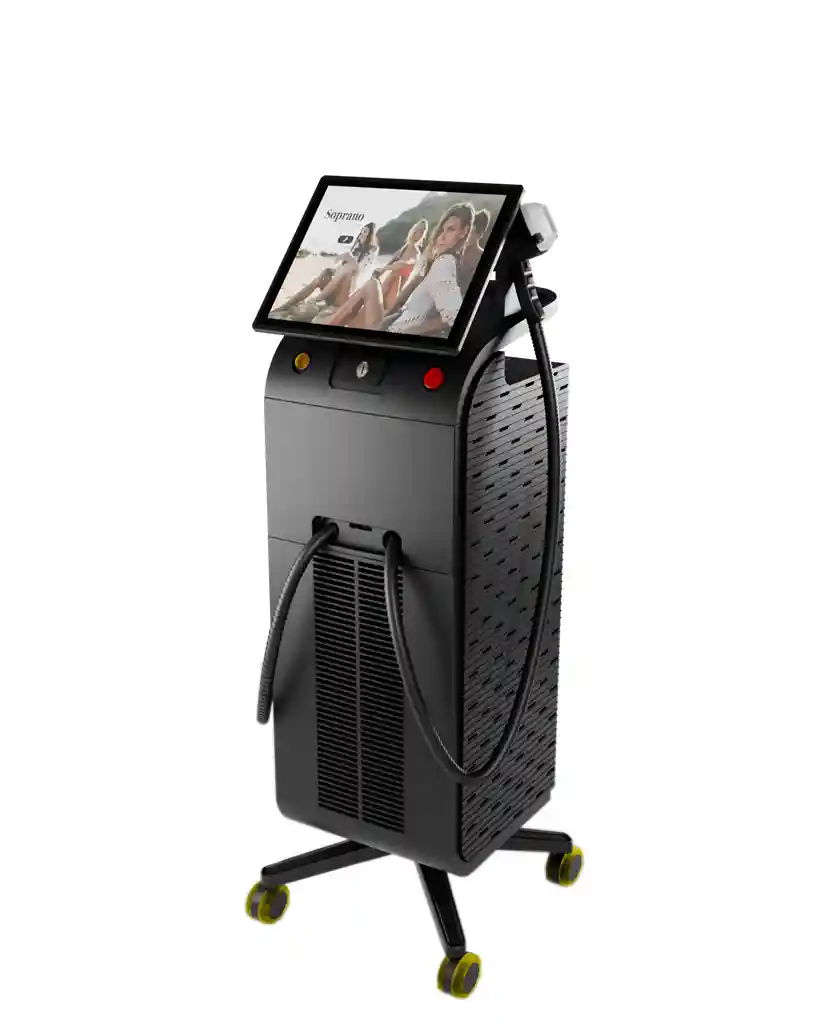
Technical Principles of Diode Laser Hair Removal:
The core principle is “selective photothermolysis.” Here is a detailed breakdown:
Core Principle
Light energy absorption by melanin: After passing through the skin’s surface, laser light at specific wavelengths is selectively absorbed by the melanin found in hair follicles and hair shafts.
Conversion of light energy to heat: The absorbed light energy rapidly converts into heat, causing a sharp rise in the temperature of the hair follicles.
Destruction of hair follicles: The high temperature causes coagulation and necrosis of the hair follicle tissue, rendering it unable to regenerate hair, while the surrounding skin tissue remains undamaged.
Principles of 4-Wavelength Technology:
The “4-wavelength” laser hair removal technology integrates four distinct laser wavelengths into a single device. Through synergistic action, it targets hair follicles at varying depths and accommodates different skin tones, thereby enhancing hair removal efficacy and patient comfort.
755nm (Alexandrite laser): Features high melanin absorption; suitable for light-colored, fine hair. It offers moderate penetration depth and affects epidermal melanin, yielding superior results for individuals with lighter skin tones.
808nm/810nm (Diode laser): Currently the mainstream wavelength for laser hair removal. It offers strong penetration and efficient energy delivery, carries a low risk of pigmentation, and is suitable for the majority of skin tones and hair types.
1064nm (Nd:YAG laser): Offers the deepest penetration and is minimally absorbed by superficial melanin; suitable for darker skin tones or deep-seated, coarse hair. It offers high safety, though the sensation of pain may be more pronounced.
940nm: Enhanced absorption for stubborn hair.
How Laser Targets Hair Follicles
Light energy absorption by melanin: After passing through the skin’s surface, laser light at specific wavelengths is selectively absorbed by the melanin found in hair follicles and hair shafts.
Conversion of light energy to heat: The absorbed light energy rapidly converts into heat, causing a sharp rise in the temperature of the hair follicles.
Destruction of hair follicles: The high temperature causes coagulation and necrosis of the hair follicle tissue, rendering it unable to regenerate hair, while the surrounding skin tissue remains undamaged.
Hair Growth Cycle and Treatment Timing
Hair goes through three phases: anagen (growth), catagen (transition), and telogen (resting). Laser treatment is effective only during the anagen phase.
The reason is that during the anagen phase, the hair follicle is intact and contains a high concentration of melanin capable of absorbing laser energy; treatment at this stage can achieve permanent hair reduction.
During the catagen phase, hair growth stops, the follicle shrinks, and melanin levels gradually decrease, limiting the laser’s effectiveness.
During the telogen phase, laser treatment is ineffective; the hair is about to shed and the follicle is dormant, meaning it cannot absorb sufficient heat from the laser.
Crucially, hair in the same area of the body does not grow synchronously; only 20%–30% of hairs are in the anagen phase at any given time. This is why multiple laser hair removal sessions are required to achieve permanent hair reduction.
Is 4-Wavelength Diode Laser Safe for Every Skin Type?
Yes, it is safe for every skin type.
Skin Types I–II: Fair Skin
Fair skin has a lower concentration of melanin, allowing for the use of higher laser energy levels. The optimal wavelengths are 755nm and 808nm. These wavelengths ensure better melanin absorption, leading to faster treatment results and a lower risk of pigmentation issues. Skin Types III–IV: Medium and Olive Skin
Medium and olive skin tones are the most common. These skin types have a balanced melanin content; an 808nm wavelength can be used as the primary setting, while a 940nm wavelength serves as a secondary option to enhance penetration into coarser hair follicles. Results are further improved when combined with appropriate cooling.
Skin Types V–VI: Dark Skin
Darker skin contains significantly higher levels of epidermal melanin. If the skin absorbs excessive laser energy—rather than the energy being absorbed by the hair follicles—there is an increased risk of burns or post-inflammatory hyperpigmentation.
For dark skin, a 1064nm wavelength is required; this reduces melanin absorption and allows for deeper penetration to target hair follicles while minimizing heat accumulation in the epidermis.
Competitive Advantages:
| Comparison Criteria | Single Wavelength | 4-Wavelength |
| Hair Types Treated | Limited range | Handles all types (coarse, fine, soft, or hard) |
| Skin Tone Compatibility | Limited | Fitzpatrick I-VI |
| Treatment Course | May require more sessions | More concentrated results; fewer sessions needed |
| Comfort Level | Varies by device | Energy is dispersed; reduced pain sensation |
| Price | Lower | Relatively higher |
Conclusion:
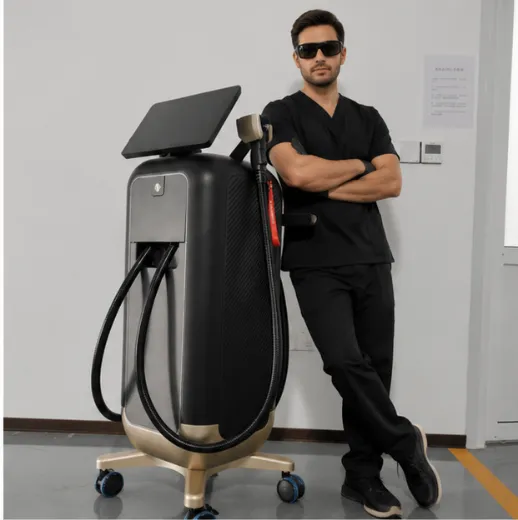
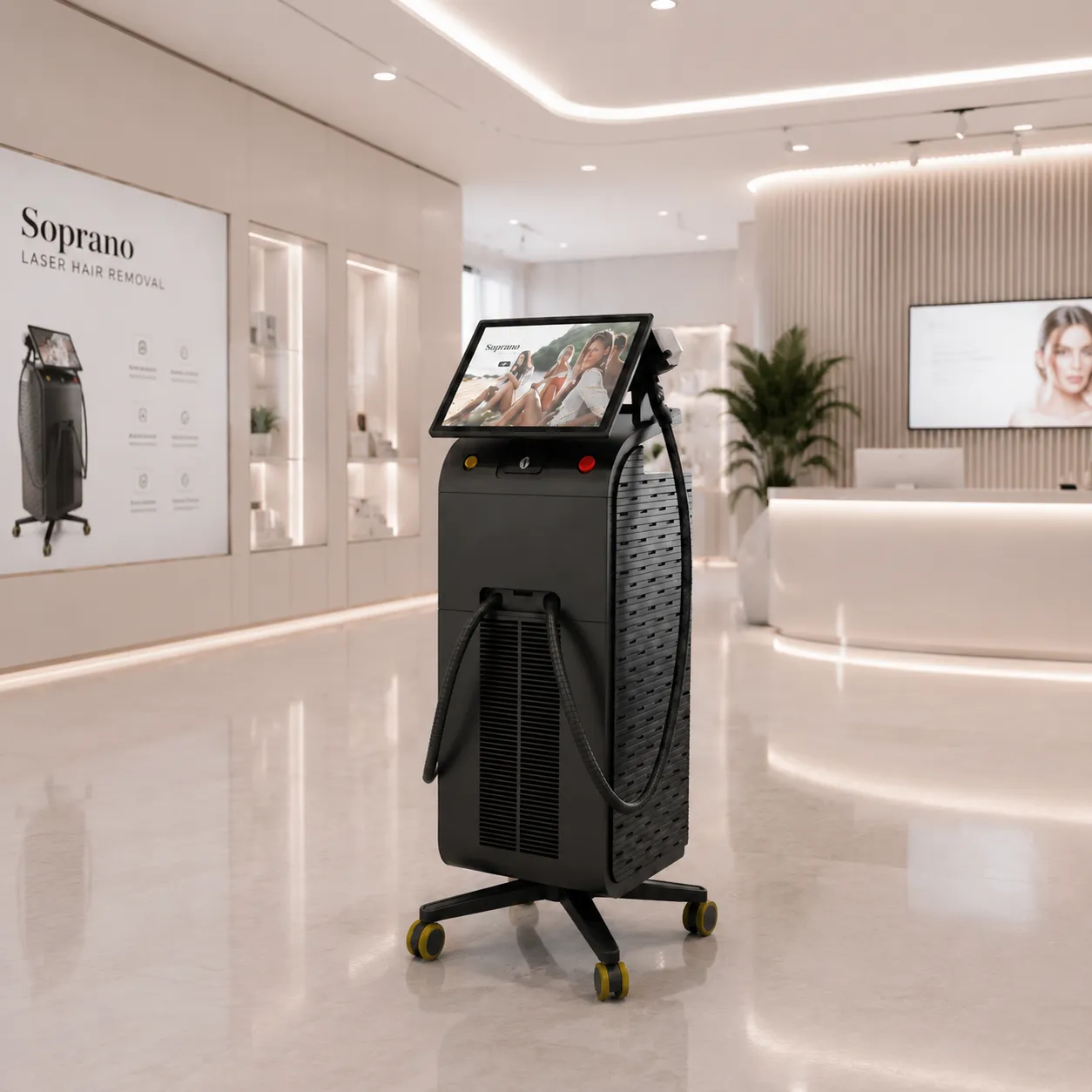
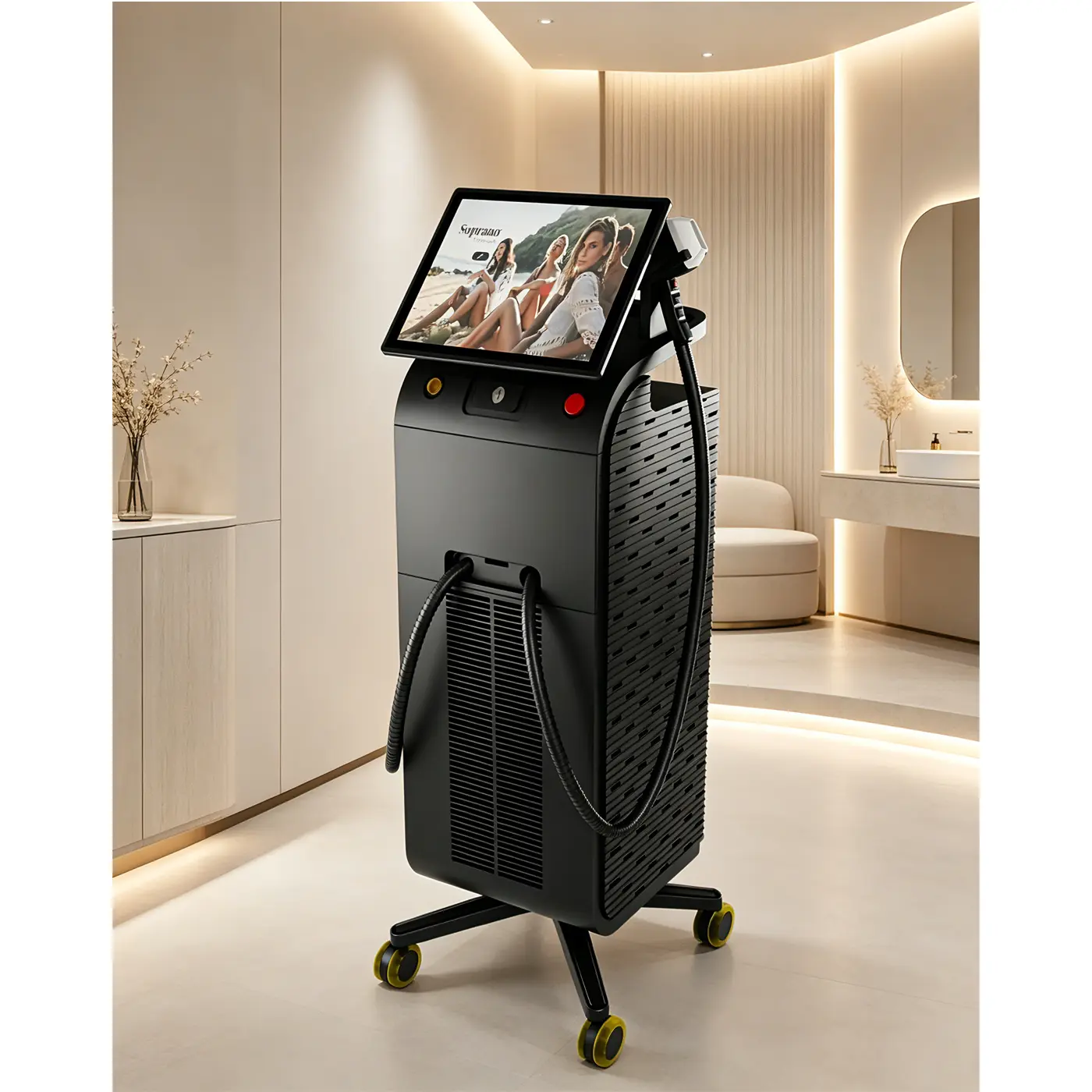
The 4-wavelength diode laser hair removal machine is suitable for a wide range of settings, including professional clinics, beauty salon chains, and high-end spas. It delivers effective treatment for consumers with diverse skin tones.
Please feel free to contact us for more details about our diode laser hair removal equipment or to request a customized quote. We are dedicated to helping you select the perfect equipment configuration for your clinic.
FAQ
- Is 4 wavelength diode laser painful? It’s nearly painless. Built-in sapphire cooling protects skin. Most people only feel mild warm tingling.
- Can dark skin use diode laser? Yes. The 1064nm wavelength minimizes epidermal melanin absorption, safely treating dark skin and lowering pigment risk.
- Which wavelength is best? No universal best wavelength.
755nm: Light skin & fine dark hair
808nm: All-purpose for most skin & thick hair
940nm: Sensitive skin
1064nm: Dark skin & deep follicles
4-in-1 design lets us match wavelengths for every client. - Is 755 better than 808? Depends on skin and hair.
755nm works better on light skin & fine hair, higher risk for dark skin.
808nm has deeper penetration and wider safety range for most customers. They complement each other. - Does 1064 remove hair? Yes. It penetrates deepest to target hair follicles and is the safest option for dark skin. It works slower on light hair, best used with other wavelengths.