Introduction
Whether you are attending industry trade shows, reviewing supplier catalogs, or browsing online for tattoo removal laser equipment, you will notice an interesting phenomenon: the number of wavelengths offered by machines on the market varies widely. Some machines feature only one wavelength, others two; many models offer three, while high-end machines may provide four or more. Why is this the case?
Tattoo pigments of different colors absorb laser energy differently. The 1064nm wavelength is primarily used for removing black and dark-colored tattoos; the 532nm wavelength is better suited for warm-toned pigments like red; and the 755nm wavelength is more effective for certain blue and green tattoos. For this reason, professional clinics that frequently treat multicolored tattoos generally prioritize multi-wavelength tattoo removal machines.
So, exactly how many wavelengths are needed for tattoo removal?
For most professional clinics, a system equipped with the 1064nm, 532nm, and 755nm wavelengths can handle the vast majority of tattoo colors found on the market. However, there is no single “perfect” configuration; the final choice depends on the types of tattoos you typically treat, your client demographic, your treatment methods, and your budget.
This guide explains which tattoo colors correspond to specific laser wavelengths, helping you select the right wavelength combination for your clinic.
Why Do Tattoo Removal Lasers Need Different Wavelengths?
To understand the wavelength count, you first need to understand a basic principle of laser tattoo removal: selective photothermolysis.
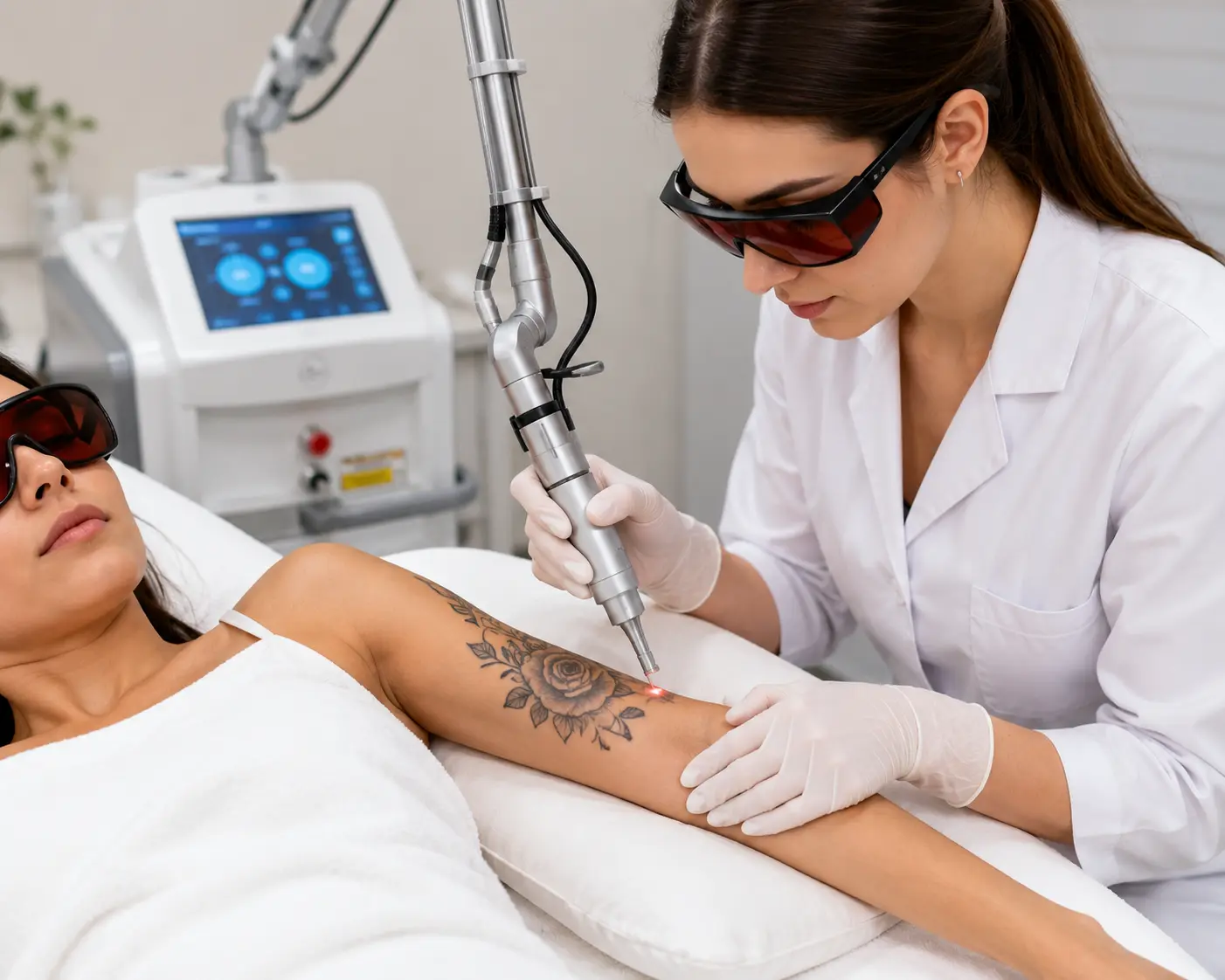
A laser works by emitting a specific wavelength of light. That light is absorbed by the tattoo ink particles, which heat up and shatter into tiny fragments. The body’s immune system then gradually flushes those fragments away.
Wavelength | Common Target |
1064nm | Black, dark blue |
532nm | Red, orange, some yellow |
755nm | Green, blue, some other colors |
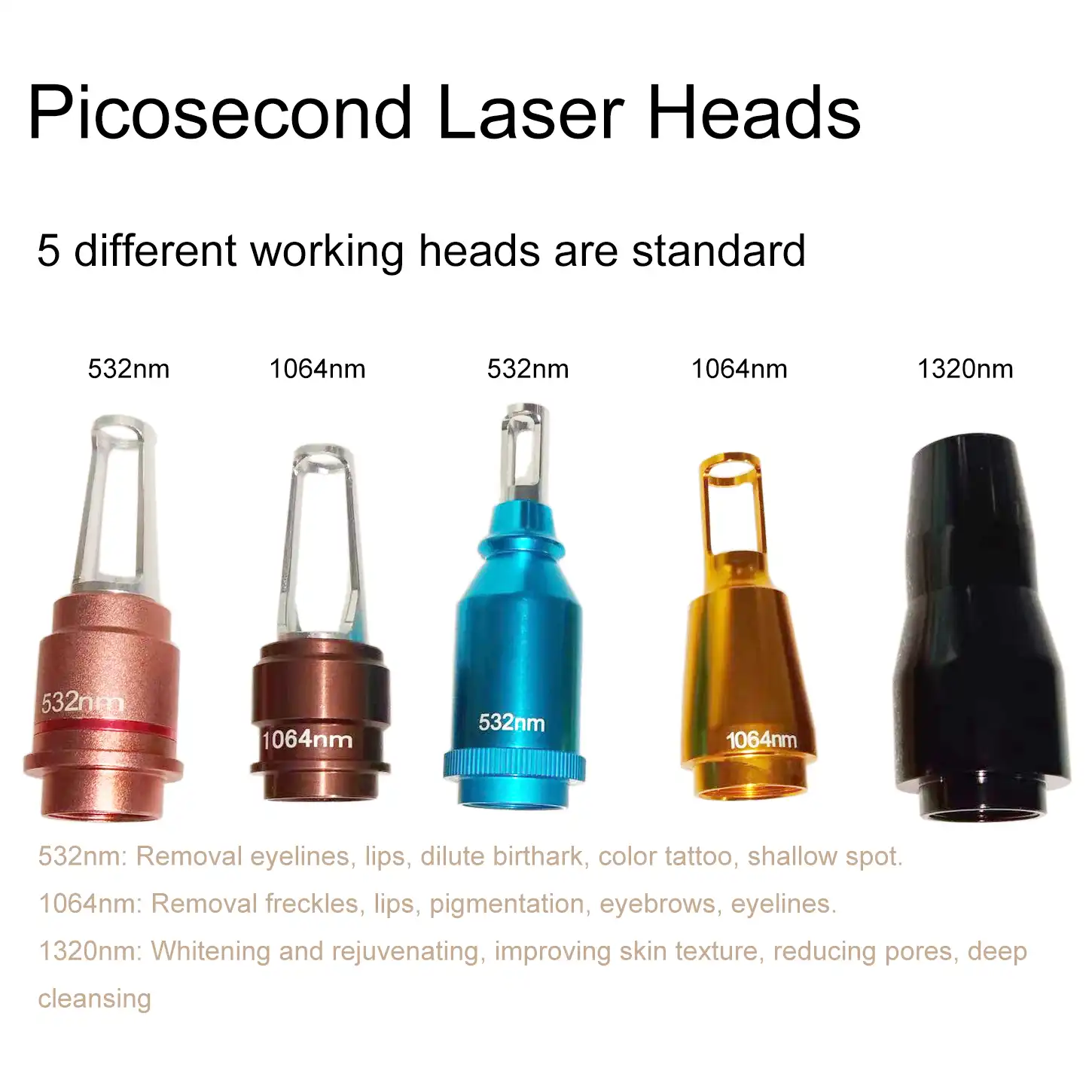
1320nm | Often used for additional skin/treatment applications rather than as the primary tattoo-ink wavelength |
What Are the Main Tattoo Removal Laser Wavelengths?

1064nm Tattoo Removal Laser
The **1064nm laser** is one of the most widely used wavelengths in tattoo removal and serves as a core configuration for professional laser tattoo removal systems. It is particularly effective at removing **black, dark blue, and other dark-colored pigments**.
Compared to shorter wavelengths, the 1064nm laser penetrates deeper into skin tissue, effectively targeting pigments located in the deeper layers of the skin.
It also plays a crucial role in treatment protocols for clients with diverse skin tones, enabling the removal of dark tattoo pigments while minimizing the risk of adverse pigmentary changes.
532nm Tattoo Removal Laser
**532nm laser tattoo removal** specifically targets warm-toned tattoo pigments that cannot be effectively broken down by 1064nm lasers. It is primarily used to treat **red, orange, and certain yellow pigments, as well as other warm-colored tattoo inks**, serving as the key wavelength for removing red tones in multicolored tattoos.
There is a distinct complementary relationship between the 532nm and 1064nm wavelengths. While the 1064nm wavelength excels at treating deep, dark inks, the 532nm wavelength is efficiently absorbed by warm-toned pigments located in the shallower layers of the skin. They have clearly defined roles: one handles dark tattoos, while the other specializes in warm tones such as red and orange.
It is worth noting that **devices equipped only with the 1064nm wavelength often have limited capabilities when treating multicolored tattoos**. The addition of the **532nm laser**—capable of removing red tones—expands the device’s functionality, enabling clinics to address the removal needs for both dark inks and warm-toned tattoos.
For clinics or aesthetic centers that frequently treat multicolored tattoos, the 532nm wavelength is essential for a comprehensive treatment offering.
755nm Tattoo Removal Laser
The **755nm laser tattoo removal system** features a critical extended wavelength specifically designed to target hard-to-remove cool-toned tattoo pigments, such as **green, blue, and certain shades of cyan**.
Green, blue, and cyan pigments absorb 755nm laser energy far more effectively than they do 1064nm or 532nm laser energy. The use of the **755nm laser for green tattoo removal** expands the range of colors the device can treat.
With the integration of the 755nm wavelength, the laser system can treat not only black and warm-toned (red, orange) tattoos but also effectively remove stubborn green, blue, and cyan designs. This represents a highly valuable upgrade for clinics that frequently handle complex, multi-colored tattoo removal cases.
1320nm Tattoo Removal Laser – Is It Necessary?
When comparing tattoo removal laser systems, you may notice that **1320nm** is also an available wavelength. So, is the 1320nm wavelength actually necessary for tattoo removal?
The short answer is: **not necessarily**. Unlike the 1064nm and 532nm wavelengths—which typically target specific tattoo pigment colors—1320nm is generally not considered a primary wavelength for removing black, red, or other tattoo pigments.
Instead, depending on the device design and manufacturer, 1320nm may be integrated into certain multi-functional laser platforms for **additional skin treatment applications**. For clinics wishing to offer services beyond tattoo removal, such multi-wavelength platforms provide greater versatility.
In summary, while 1320nm can be a useful additional wavelength, it is not essential for every tattoo removal laser system.** If your primary goal is tattoo removal, prioritize the wavelengths and laser technologies best suited to the specific tattoo pigments your clinic treats most frequently.
How Many Wavelengths Does a Tattoo Removal Laser Actually Need?
Single-Wavelength Tattoo Removal Laser
Single-wavelength tattoo removal lasers typically utilize **1064nm** as their sole operating wavelength, representing the most fundamental and cost-effective configuration in the industry.
This type of equipment is ideal for studios with **limited budgets** and clinics serving a clientele primarily with **black tattoos**. It specializes in targeting black and dark pigments, delivering stable and highly effective results for solid black tattoos.
In terms of advantages, single-wavelength lasers feature a **simple internal structure**, a low failure rate, and lower acquisition and maintenance costs. For shops focusing exclusively on removing traditional black tattoos, this device fully meets daily treatment needs without the burden of superfluous features.
The primary limitation of single-wavelength tattoo removal lasers is their **poor coverage of colored tattoos**. Lacking auxiliary wavelengths such as 532nm or 755nm, they cannot effectively remove common tattoo pigments in red, orange, green, and blue, resulting in a narrow service scope and a limited customer base.
Two-Wavelength Tattoo Removal Laser
The most common dual-wavelength tattoo removal laser system features the classic **1064nm + 532nm combination**, representing the most mainstream and practical configuration in the industry.
These two wavelengths work in perfect tandem to address a wide range of tattoo pigment colors. The **1064nm wavelength specifically targets dark inks**, including black and dark blue tattoos. Meanwhile, the **532nm wavelength targets red, orange, and other warm-toned pigments** that the 1064nm wavelength cannot effectively remove.
Compared to single-wavelength 1064nm devices, dual-wavelength systems offer **broader color coverage**. They are capable of treating both standard black tattoos and common warm-toned tattoos, significantly expanding the scope of treatable cases.
For most entry-level and mid-range clinics, the 1064nm + 532nm dual-wavelength configuration delivers balanced performance, consistent results, and excellent cost-effectiveness, effectively meeting the demands of daily tattoo removal operations.
Three-Wavelength Tattoo Removal Laser
Three-wavelength laser tattoo removal systems typically feature a combination of **1064nm, 532nm, and 755nm** wavelengths. This configuration is highly favored by **tattoo removal clinics, aesthetic clinics, and specialized laser centers**.
Each wavelength targets specific ink colors:
‑ The 1064nm wavelength treats black and dark blue inks;
‑ The 532nm wavelength targets warm-toned pigments such as red and orange;
‑ The 755nm wavelength targets green pigments, as well as certain shades of blue and complex hues.
Working in synergy, these three wavelengths provide comprehensive coverage for tattoo inks including **black, dark blue, red, orange, green, and various shades of blue**.
For clinics that frequently treat multi-colored tattoos, a three-wavelength system offers a more versatile treatment platform than single-wavelength alternatives. It overcomes the limitations of dual-wavelength devices when dealing with stubborn green and blue-green tattoos, enabling practitioners to effectively treat more complex, multi-colored designs.
Is a 3-Wavelength Tattoo Removal Laser Better Than a Single-Wavelength Laser?
Factor | Single Wavelength | 3-Wavelength |
Black tattoos | ✓ | ✓ |
Colorful tattoos | Limited | Better coverage |
Treatment flexibility | Lower | Higher |
Clinic applications | More limited | More versatile |
Initial investment | Usually lower | Usually higher |
It is not a case of “the more wavelengths, the better,” but rather “whether the wavelengths cover your target customers.”
Frequently Asked Questions
Is 1064nm enough for tattoo removal?
1064nm performs extremely well for most black and dark‑colored tattoos and serves as a core foundation for tattoo removal. However, it has very limited coverage for red, orange, green, blue and other colored tattoo inks. If your clinic frequently receives colorful tattoo cases, relying only on 1064nm cannot meet full‑range treatment demands.
What wavelength is best for black tattoo removal?
**1064nm is the preferred wavelength for black tattoo removal.** It delivers deep skin penetration to reach deeply‑buried black and dark‑blue ink particles. It also works safely across different skin types, lowering risks of post‑treatment pigment changes. This is why nearly all professional tattoo removal lasers include 1064nm as their base wavelength for dark‑ink treatments.
What wavelength is used for red tattoo removal?
**532nm is the primary wavelength for red tattoo removal.** It is highly absorbed by red, orange and some yellow warm‑toned pigments which 1064nm cannot break down effectively. For common red‑ink tattoos, 532nm is the standard solution in professional laser systems.
What wavelength removes green tattoos?
**755nm is the main wavelength for treating green tattoos.** Green and certain cyan‑blue pigments show poor response to 1064nm and 532nm. Actual treatment results still depend on the exact composition of the tattoo pigment, ink age and ink depth. In many professional clinics, 755nm is added specially to tackle stubborn green‑ink cases.
Is 3 wavelengths enough for tattoo removal?
For most professional tattoo‑removal businesses, the combination of **1064nm + 532nm + 755nm** delivers excellent coverage for the majority of common tattoo colors, including black, red, orange, green and many blue pigments. Even so, suitability still depends on your target client base, the types of tattoos you regularly treat, and the actual technical performance of the laser device itself.
Is a 4‑wavelength tattoo removal laser better?
More wavelengths do not automatically mean better treatment results. When evaluating a 4‑wavelength system, you need to look beyond wavelength count. Make a comprehensive comparison including **pulse duration, fluence, spot size, cooling system and overall machine stability**. Some added wavelengths may serve only auxiliary skincare purposes rather than improving tattoo‑removal performance. Choose according to your real clinical needs instead of simply chasing a higher wavelength number.